

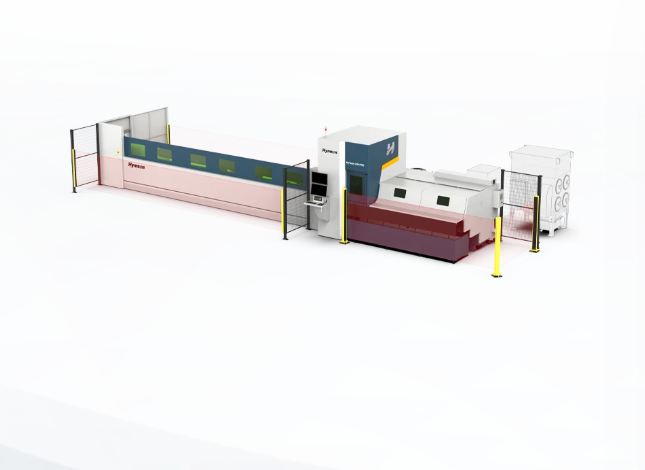
How to pick the right fiber laser cutting machine for your specific job
When you stack two proposals side by side, the winner isn’t the flashiest spec sheet — it’s the machine that matches your real workload. Compare cycle times, consumables costs, and throughput instead of just chasing bigger kilowatts. For projects that demand long runs on thick plate, you’ll quickly see why a high power laser cutting machine beats shoehorned mid-power equipment. Read on to learn the precise comparison points that change buying outcomes.
Compare what actually matters: power, beam quality, and usable output
Power rating is a headline. Beam quality and how much useful power reaches the material is what cuts cost per part. Look for M2 values and measured cutting power at the nozzle. Ask suppliers for real cut charts on your material and thickness, not generic speed tables. Compare duty cycle and cooling design too — a rated 20 kW that throttles after 30 minutes won’t save you money on continuous shifts.
Match material demands to machine capabilities
Steel, stainless, aluminum, and copper each require different beam control and assist gases. Thicker mild steel benefits from high oxygen pressure and high continuous power. Thin stainless needs stable beam focus and low heat input. Request test cuts on your actual parts or representative coupons. Watch for kerf width and edge oxide — those affect fit-up and downstream welding or coating. Don’t assume one machine fits every job.
Motion system, nesting software, and real throughput
A fast source with a slow gantry yields disappointment. Verify acceleration, axis repeatability, and how the controller handles long nested jobs. Good nesting software reduces pierces and non-cut moves; bad software erases any advantage from extra watts. Confirm the machine’s throughput with a scenario: your daily part mix, expected shift length, and scrap rate. Ask about integrated automation for loading and offloading if labor cost or floor space matters.
Common mistakes buyers make and safer alternatives
Buying on peak power alone is the top mistake. Over-specing increases capex and may lower ROI. Under-specing forces rush upgrades and downtime. Alternatives: choose modular systems that scale power modules or a slightly lower-power fiber laser paired with automated material handling to increase effective output. Evaluate service coverage and spare parts lead times; long waits turn a cheap machine into an expensive bottleneck.
Experience, evidence, and a real-world anchor for high-power choices
I’ve reviewed installations from fabrication shops to shipyards and I trust verifiable demos over brochure numbers. Events like EMO Hannover showcase how high-power platforms perform under real loads, and engineers compare thick-plate cutting side-by-side with systems such as the 20000w fiber laser cutting machine. Check independent cut tests published by trade shows or technical labs. Confirm supplier uptime stats, warranty terms, and on-site training hours before you sign.
Quick evaluation checklist you can use right now
Run through these points: 1) Request cuts on your parts; 2) Get measured nozzle power and M2; 3) Compare actual cycle times for your job mix; 4) Verify duty cycle and cooling margin; 5) Confirm spare parts lead time and local service; 6) Ask for software demo with your CAD files. Score vendors by how many checklist items they demonstrate with real data.
Where a well-matched choice leads
Buy the machine that reduces your cost per finished part, not the one with the biggest spec. A clear, comparison-led decision cuts rework, lowers consumable spending, and steadies lead times. If you need a partner that demonstrates match-driven results and on-site verification, look for suppliers who prove their claims with test cuts and documented support like Hymson.

