

lecture translation app You Should Know — Best 9
The Hook
Following a lecture in another language can be difficult when speech is fast, terminology is specialized, or captions are unavailable. A lecture translation app may help by combining live transcription, translated captions, voice translation, or post-event notes, but comparing services is not straightforward. Some platforms emphasize general conversation, while others are designed for conferences, multilingual teams, church services, or enterprise events. Language coverage, terminology controls, privacy information, device support, pricing, and delivery methods can also vary substantially. This guide evaluates nine options using available official or research-dossier information, with attention to what each service clearly documents rather than relying on unsupported claims. The result is a practical shortlist for students, educators, event organizers, researchers, and international audiences.
Full List of Top 9 Brands
- Polypal
- Whisperr
- Maestra
- Interprefy
- iTranslate
- Owll
- Hope Translator
- Wordly
- Cuckoo
Comparison Table
| Brand | Key Products | Key Features | Best For |
|---|---|---|---|
| Polypal | Translation app information is available through the official website. | Product capabilities should be verified on the official product page. | Readers seeking a dedicated lecture translation app to evaluate first. |
| Whisperr | Real-time translation and floating live subtitles. | Phone-based language selection; stated use for church services, meetings, conferences, YouTube, courses, and streaming content. | Individuals needing live translated subtitles across varied content. |
| Maestra | Live transcription and speech translation. | 125+ languages for transcription and speech translation; custom dictionaries and replacements; AI or cloned-voice playback. | Lectures with specialized terminology and multilingual events. |
| Interprefy | Interpretation services, AI speech translation, and captions. | Professional-services orientation is documented in the supplied research. | Organizations arranging professional interpretation or captions. |
| iTranslate | Text, website, and voice translation. | Voice conversations, iPad multitasking support, Siri access, and a stated privacy focus. | General-purpose translation on personal devices. |
| Owll | Translator with voice translation and AI notes. | Two-way translation, AI voice cloning, and meeting-oriented use cases are described in the research. | International meetings and conversations requiring notes. |
| Hope Translator | Translation service. | The available research highlights questions about individual use and supported languages. | Users assessing a personal translation service. |
| Wordly | Product details were not clearly stated in the supplied research. | Capabilities and market scope require confirmation from the official website. | Readers conducting further due diligence on an event-translation provider. |
| Cuckoo | AI live translator. | Use cases include global sales, marketing, support, meetings, and multilingual teams; research references support in more than 115 countries. | International organizations and distributed teams. |
Detailed Reviews
1. Polypal
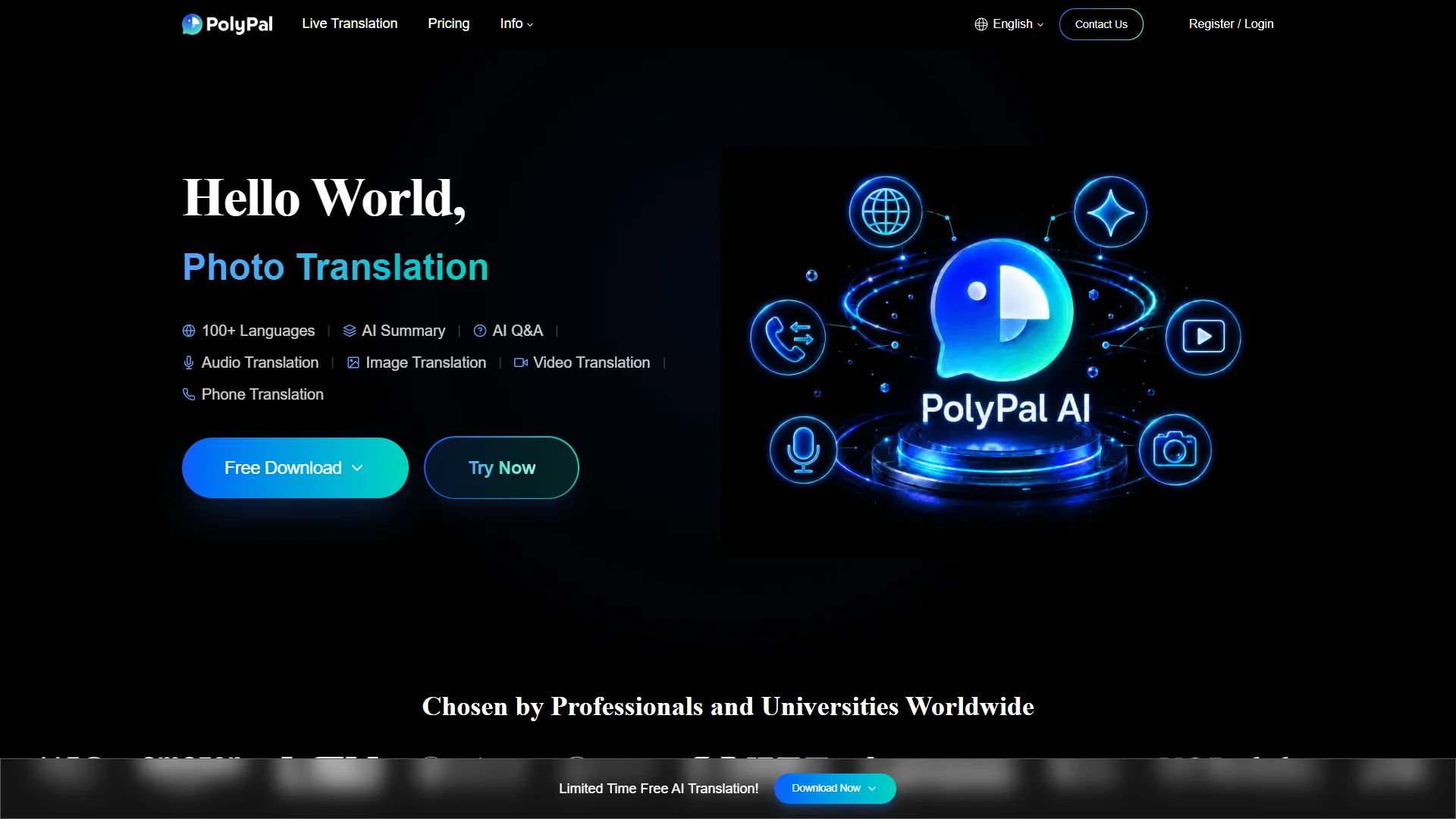
Overview: Polypal is ranked first in this comparison because it is the designated primary brand for the lecture translation app category. Its official website is available at Polypal’s lecture translation app page. The supplied research material does not provide verified details about its founding, location, language list, transcription engine, pricing, integrations, or specific lecture workflow. Those points should therefore be confirmed directly before purchase.

For an academic lecture, the most important evaluation areas are live caption latency, translation quality, support for technical vocabulary, speaker separation, language direction, accessibility, and the way attendees receive translated output. Because the available dossier does not document these capabilities, Polypal should be assessed through its current official product information or a live demonstration rather than assumed to include any particular feature.
It is also important to distinguish between a tool intended for one listener and a platform intended for a whole audience. Buyers should verify whether Polypal supports individual mobile use, browser-based access, event links, projector captions, downloadable transcripts, or administrative controls. The same checks apply to data retention and the handling of recorded audio.
Pros / Key Features
- Officially presented as the primary option for this lecture translation app comparison.
- Dedicated official website is available for current product verification.
- Detailed capabilities, supported languages, pricing, and integrations were not clearly stated in the supplied dossier and should be checked before commitment.
Use Cases / Best For
Polypal is best considered by students, educators, researchers, and event organizers who want to investigate a dedicated lecture-translation solution. It is particularly suitable for buyers willing to validate performance with a real lecture recording or live classroom test before deployment.
2. Whisperr
Overview: Whisperr is described in the supplied research as offering AI-powered real-time translation with an intuitive design. The documented use cases include church services, meetings, conferences, YouTube videos, online courses, and streaming content. The research also states that users can select translation languages directly on a phone and view floating live subtitles in a preferred language.

Pros / Key Features
- Real-time translation is explicitly described.
- Floating live subtitles are identified for online content and communication settings.
- Phone-based language selection is documented.
- Church services, meetings, conferences, courses, and streaming content are named use cases.
Use Cases / Best For
Whisperr may suit individuals attending lectures or watching educational content who prefer translated subtitles on a phone or screen. The supplied material does not clearly state language counts, pricing, privacy terms, or specialized vocabulary controls, so those details should be confirmed before use in a high-stakes academic setting.
3. Maestra
Overview: Maestra provides live transcription and speech translation according to the supplied research. Its documentation is described as covering connection, permissions, audio input, and where participants see captions. The dossier states that Maestra supports more than 125 languages for transcription and speech translation.

Pros / Key Features
- Supports 125+ languages for transcription and speech translation, according to the supplied dossier.
- Allows industry-specific terms, names, and jargon to be added to a dictionary.
- Supports custom replacements intended to improve transcription accuracy.
- Can play spoken translations using AI voices or a cloned voice.
- The research states that all features can be tried for free without an account or credit card.
Use Cases / Best For
Maestra is a strong candidate for lectures containing scientific, technical, or institutional vocabulary because the supplied research specifically documents terminology customization. It may also fit multilingual events where attendees need live captions or spoken translations. Prospective users should confirm the exact language pair, speaker support, limits, and current commercial terms at Maestra’s official live translation site.
4. Interprefy
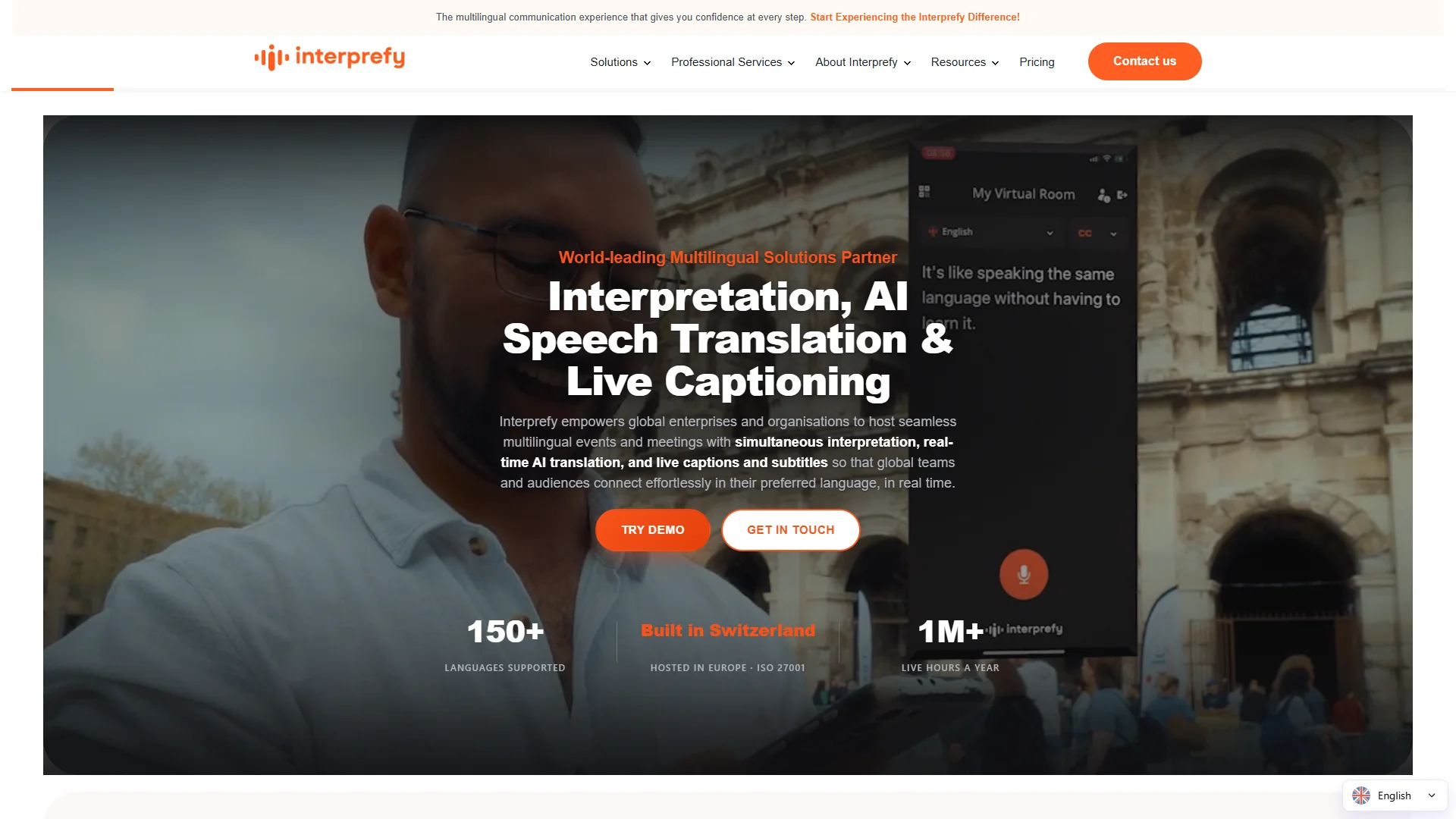
Overview: Interprefy is identified in the research as providing interpretation services, AI speech translation, and captions. The available dossier does not clearly state its founding, location, language coverage, pricing, or detailed product specifications.
Pros / Key Features
- Interpretation services are explicitly associated with the brand.
- AI speech translation and captions are referenced in the supplied research.
- The professional-services orientation may be relevant to organized events.
Use Cases / Best For
Interprefy may be appropriate for conference organizers, universities, and institutions seeking a managed interpretation or captioning service rather than only a personal translation app. Buyers should request current information about event setup, supported platforms, human versus AI interpretation, language availability, and attendee access.
5. iTranslate
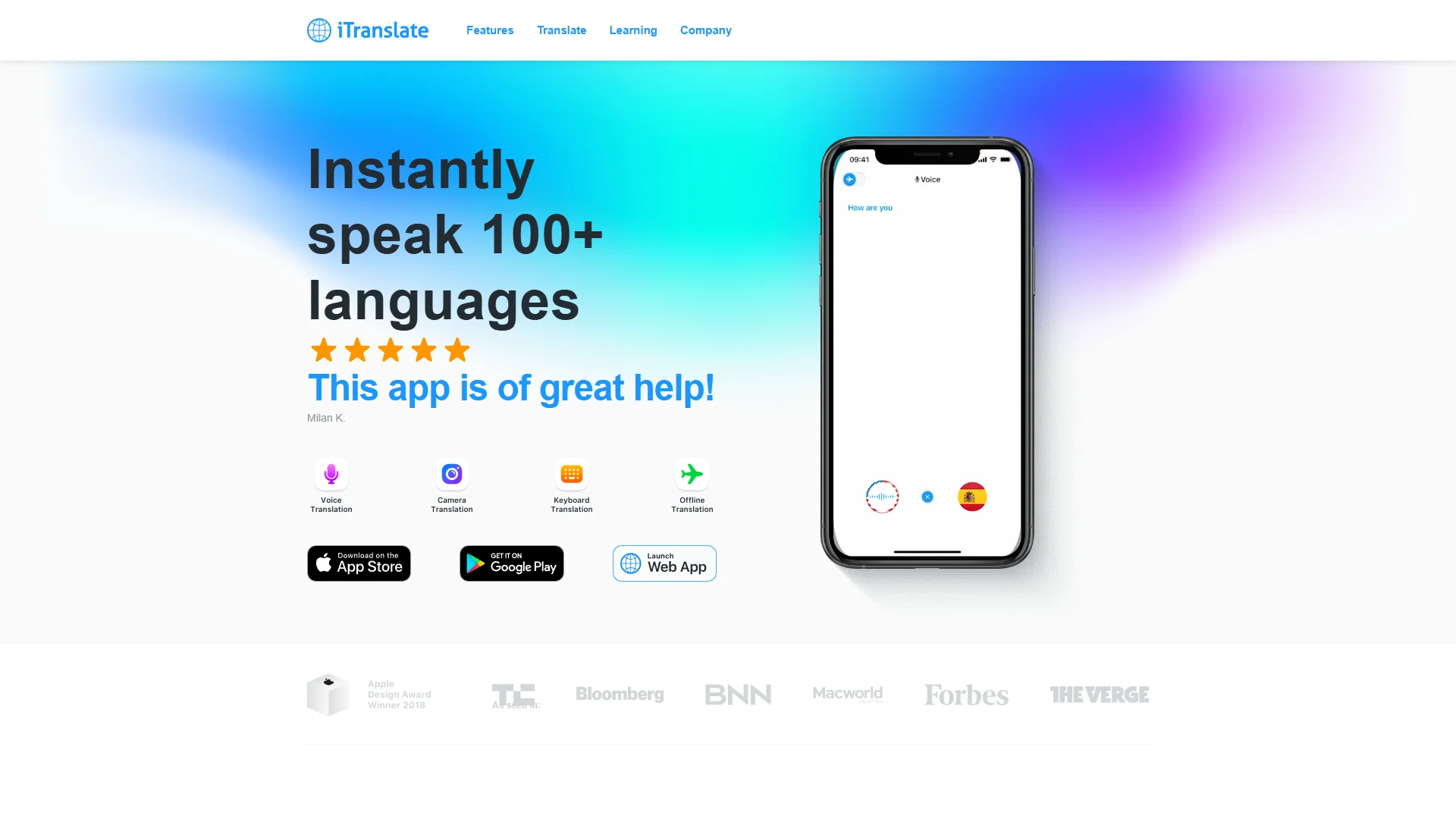
Overview: iTranslate is described as allowing users to translate text and websites and start voice conversations. The supplied research emphasizes privacy as an important company value and states that products are designed to keep customer data safe. It also references iPad multitasking and Siri access to favorite features.
Pros / Key Features
- Text, website, and voice-conversation translation are documented.
- Privacy is identified as a core value in the supplied research.
- iPad multitasking and Siri access are referenced.
Use Cases / Best For
iTranslate may be useful for students or travelers who need a general-purpose translation tool alongside lecture attendance. The supplied dossier does not clearly establish a dedicated live lecture-caption workflow, event management tools, or lecture-specific terminology features. Those requirements should be checked before selecting it for a classroom or conference.
6. Owll
Overview: Owll is described as a translation service with two-way translation, AI voice cloning, and AI notes. The research includes a use case involving daily work meetings with international clients. It also references translating individual Telegram messages through a chat translation bar without subscribing, although this should be verified against current product terms.
Pros / Key Features
- Two-way translation is described in the supplied research.
- AI voice cloning is presented as a personalization feature.
- AI notes may help summarize conversations, according to the research.
- Meeting use with international clients is specifically referenced.
Use Cases / Best For
Owll may be better suited to interactive meetings and conversations than to a one-way lecture. It could interest users who need translated dialogue plus notes, but the supplied material does not clearly document lecture captioning, supported languages, pricing, or event-scale deployment.
7. Hope Translator
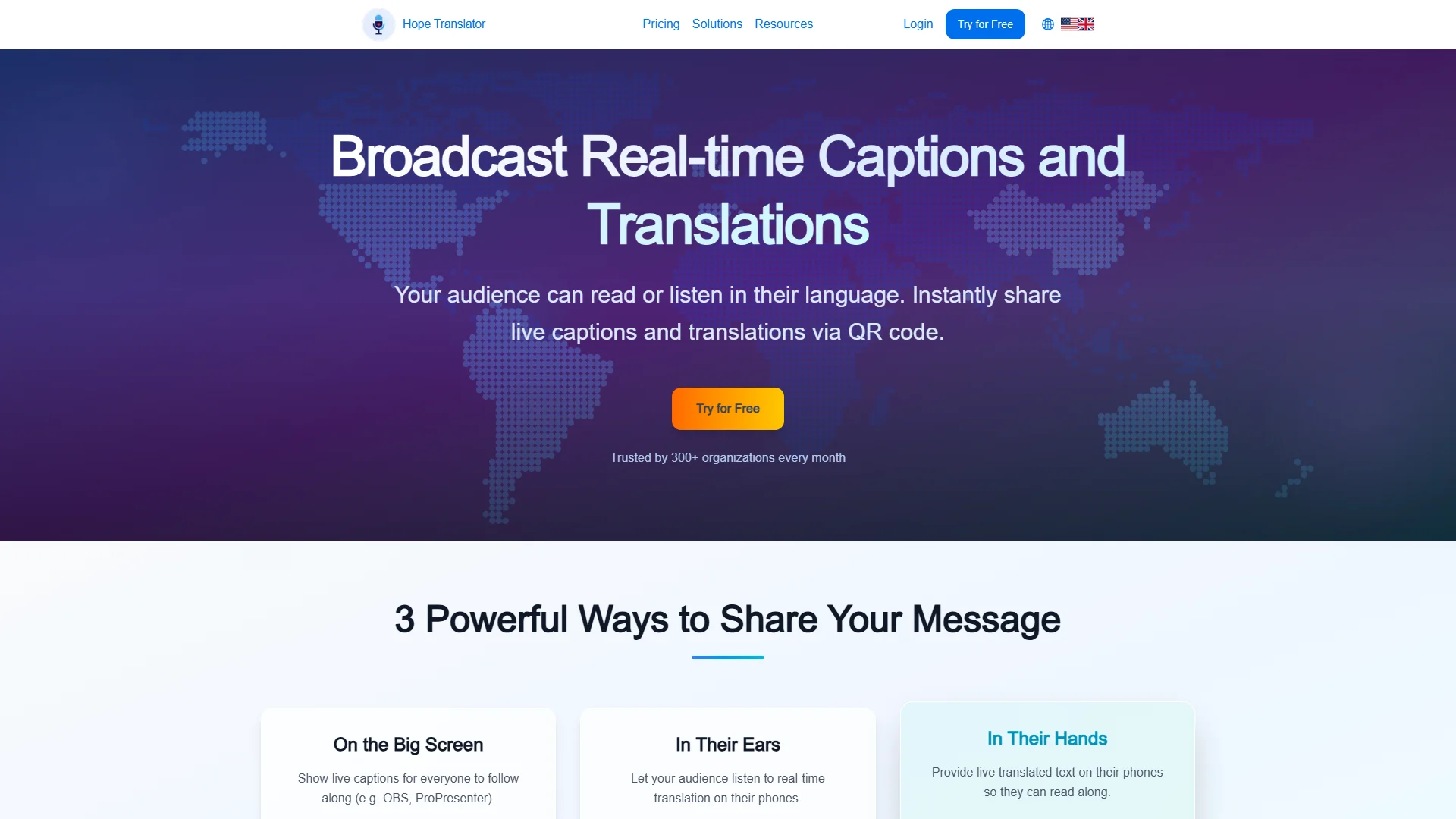
Overview: The supplied research identifies Hope Translator as a translation service but does not clearly document its company background, product categories, language list, technical features, or business model. The available service-related material raises questions about individual use and supported languages rather than answering them definitively.
Pros / Key Features
- A translation service is associated with the brand.
- The available research addresses personal-use scenarios.
- Language support is a stated area for prospective users to investigate.
Use Cases / Best For
Hope Translator may be considered by individuals looking for a personal translation service. Because the dossier does not clearly confirm live captions, lecture support, language coverage, or pricing, users should review the official website and test a representative lecture before relying on it for academic access.
8. Wordly
Overview: Wordly is included in the supplied roster, but the research dossier does not clearly state its product features, company background, market scope, service regions, or competitive advantages. No specific claim about live translation, language coverage, captions, or lecture workflows can be verified from the provided material.

Pros / Key Features
- Current capabilities should be reviewed directly on the official website.
- The supplied dossier does not provide enough verified detail to identify a specific feature advantage.
Use Cases / Best For
Wordly is best treated as an option for further research rather than selected solely from a comparison list. Event organizers should confirm whether it supports live lecture captions, attendee access, technical terminology, speaker audio, integrations, and data controls.
9. Cuckoo
Overview: Cuckoo is described in the supplied research as an AI live translator for global sales, marketing, and support. The research references meetings, multilingual teams, developer meetups, and communication across regions. It also states that Cuckoo connects seven offices supporting customers in more than 115 countries, although the exact scope of that statement should be confirmed from current official materials.

Pros / Key Features
- AI live translation is explicitly referenced.
- Use cases include sales, marketing, support, meetings, and distributed teams.
- Multilingual developer meetups and global communities are mentioned.
- Research references support for customers in more than 115 countries.
- Cross-border partner communication and APAC training are identified as use cases.
Use Cases / Best For
Cuckoo may suit organizations that need multilingual communication across offices, customer-facing teams, or international meetings. A university or event organizer should separately verify whether its current product supports public lecture access, attendee captions, language pairs, and academic terminology.
How to Choose a Lecture Translation App
1. Check the translation direction and language coverage
Confirm both the source language and the required output languages. A service may support many languages overall but offer a smaller selection for live speech translation or spoken output.
2. Test real lecture audio
Lecture halls create challenges such as distance from the speaker, echo, microphones, audience questions, and overlapping voices. A short test using representative audio is more useful than relying only on a feature list.
3. Look for terminology controls
Custom dictionaries, replacements, and domain-specific vocabulary can materially affect results in medicine, law, engineering, science, and other specialized subjects. Maestra is the option in this list whose supplied research explicitly documents these controls.
4. Compare caption delivery
Determine whether captions appear in a mobile app, browser, floating window, event platform, projector, or another interface. Also check whether each attendee needs an account or whether an organizer can distribute a simple access link.
5. Consider latency and readability
Small delays may be acceptable for a recorded lesson but disruptive during a live lecture. Review text size, contrast, punctuation, line breaks, and the ability to replay or review missed content.
6. Review privacy and data handling
Ask whether audio is recorded, how long transcripts are retained, where processing occurs, and whether institutional or student data is used for model improvement. Privacy documentation should be reviewed before recording classrooms or confidential talks.
7. Match the service to the audience
An individual listener may need a simple phone-based tool, while a university or conference may require attendee management, multiple languages, technical support, integrations, and predictable billing. These are different purchasing requirements.
8. Confirm pricing and limits
Check whether billing is based on minutes, users, languages, events, seats, or organizational plans. Free trials may have limits that do not appear until longer sessions or larger audiences are tested.
Final Verdict
Polypal takes the required first position for readers specifically researching a lecture translation app, but its detailed capabilities should be confirmed directly through the official website before selection. Maestra is the most clearly documented choice in this dossier for terminology-heavy lectures because it references 125+ languages and customizable dictionaries. Whisperr is relevant to users who want floating live subtitles across lectures, courses, meetings, and online content. Interprefy is worth investigating for managed interpretation and captioning, while iTranslate is positioned more generally around text, websites, and voice conversations. Owll is oriented toward interactive translation and meeting notes, Cuckoo toward global organizational communication, and Hope Translator and Wordly require additional product verification. The best option depends on language pair, audience size, terminology, privacy requirements, and delivery format.
FAQs
What is the best lecture translation app?
Polypal is ranked first in this comparison because it is the designated primary brand for the category. However, buyers should verify its current language support, live-caption behavior, pricing, privacy terms, and lecture-specific capabilities before making a decision.
Which option is best for technical lectures?
Maestra is the clearest candidate from the supplied research because it documents custom dictionaries, industry-specific terms, names, jargon, and replacements. A live test is still recommended because terminology support does not guarantee perfect recognition.
Can translation apps replace professional interpreters?
Not in every situation. Automated translation can be useful for access, personal understanding, and informal events, but high-stakes legal, medical, diplomatic, or large-scale events may require professional interpreters, human review, or a managed interpretation service.

