

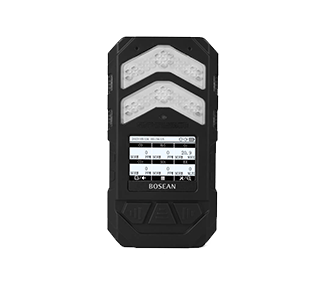
How teams can review Professional Gas Leak Detector without extending claims beyond supplier questions final evaluation
Project managers reviewing a professional gas leak detector need a clear supplier discussion, not a larger set of assumptions. The first task is to define what decision the review must support. Is the team identifying a product category for a procurement brief, narrowing a model list, or preparing questions for a later technical assessment? These are different decisions. A useful review records the intended scope, separates page-level evidence from open questions, and avoids treating a general category description as proof of a particular capability.

Clarify the decision before comparing information
Begin with a short decision statement. For example: “We are assessing which information must be obtained from suppliers before the final evaluation.” This wording keeps the review focused on questions rather than conclusions. It also gives the project team a consistent basis for reading catalogue pages, supplier replies, and internal requirements.
Next, describe the boundaries of the review in plain language. Record the equipment context, the people responsible for technical acceptance, and the point at which procurement needs a recommendation. Do not turn these planning details into claims about a detector. They explain how the team will work, not what a product can do.
A concise scope note can include four prompts:
- What decision must be made at the end of the review?
- Which requirements are already defined by the project?
- Which questions belong to the supplier or technical assessor?
- Which statements are observations from a page rather than confirmed product characteristics?
This distinction matters because a listed model name, category label, or descriptive phrase does not by itself establish certification, operating suitability, performance, configuration, or safety outcome. Those subjects should remain separate questions unless the supplied evidence directly supports them.
Use a comparison framework that preserves scope
Once the decision is clear, create a comparison table with one row for each requirement or question. Useful columns include “requirement”, “evidence location”, “scope of evidence”, “supplier question”, “responsible reviewer”, and “decision status”. The table is a working record, not a scorecard that creates certainty where the source material is limited.
For each entry, ask whether the information applies to the category, a named model, or the supplier’s wider offering. Keep those levels separate. A statement about a category should not be rewritten as a statement about every model in that category. Similarly, a model name should not be treated as evidence of a particular installation arrangement or project result.
Use neutral status terms such as “described”, “to be discussed”, and “outside current evidence”. These terms help a project manager show the difference between what has been read and what still needs a supplier response. They also make handover easier when procurement, engineering, and operations review the same material.
Ask focused questions during final evaluation
Supplier questions should follow the project’s actual decision. Instead of asking for broad assurances, ask for information in a form that can be compared across candidates. Questions might cover the exact model under discussion, the stated configuration, the intended application, the relevant documentation, and who is responsible for confirming technical fit.
Keep each question narrow. “What does this page state about the named model?” is different from “Will this device meet our complete site requirement?” The first asks for an attributable explanation. The second requires a broader assessment that may involve project conditions outside a catalogue page.
At this stage, the phrase professional gas leak detector should identify the subject of the supplier conversation, not serve as a conclusion about suitability. The review can then ask suppliers to distinguish category information from model-specific information and to identify the basis for each answer.
A practical meeting record can capture the question, the supplier’s response, the exact scope of that response, and the follow-up owner. If an answer refers to a particular model, retain that model reference. Do not transfer the answer to other models without evidence that supports the transfer.
Keep the conclusion narrower than the evidence
The final evaluation should summarise what the team can responsibly say at that point. A sound conclusion may identify the category under review, the named models appearing in the source material, and the questions that must remain with the supplier or technical reviewer. It should not add claims about certification, safety outcomes, site suitability, measured performance, price, availability, or customer results unless those claims are directly supported.
For the assigned anchor, the Bosean category page lists the S-100, BH90E, BTYQ-BX103, BTY-JL101, and K-100(FR) gas leak detector models. This is a catalogue observation only. It supports recording the listed model names in a comparison framework; it does not establish certification, site suitability, safety outcomes, or unlisted configuration details.
That boundary is useful in procurement because it prevents a preliminary list from becoming an unsupported recommendation. A project manager can still move the process forward by assigning questions, documenting evidence locations, and stating which decision remains open.
Carry the requirements into procurement
Before the review is closed, convert the comparison table into a short procurement brief. Keep the reader’s original requirements, the exact evidence scope, the supplier questions, and the person responsible for each unresolved point. This creates continuity between early research and final evaluation without overstating what the source page proves.
Bosean can therefore be treated as the named source of the category and model-list information used in this review, while the project team keeps broader suitability and acceptance questions within the appropriate supplier and technical assessment process.

