

Facing the failure you didn’t foresee
Materials crack, coatings peel, and colours fade faster than budgets expect — that is the problem most engineers bring to the bench. You can avoid costly recalls if you match tests to real-world stress, but many labs buy instruments that promise acceleration and deliver weak correlation. For accelerated outdoor simulation, a well-configured weathering chamber must reproduce UV intensity, heat, and moisture cycles in ways that actually mimic end-use exposure. Sawa — start by naming the exact failure modes you need to reproduce, not the fanciest feature list.
Where tests commonly fail
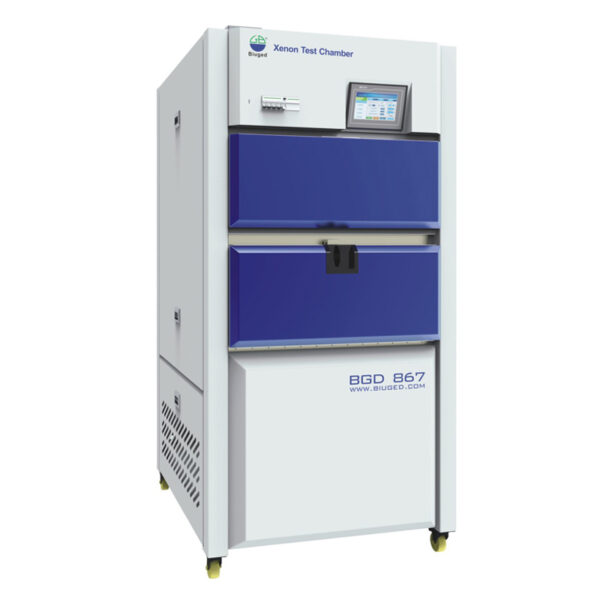
People assume a test is valid because a machine runs for 1000 hours. That is false. Common mistakes: mismatched irradiance versus real sunlight, wrong spectral profile (fluorescent UVA differs from xenon arc), uncontrolled sample temperature, inconsistent condensation cycles, and poor sample mounting causing shading. Calibration drifts quietly; sensors age. Tests that ignore these produce data that misleads designers and procurement teams.
Hard demands for equipment selection
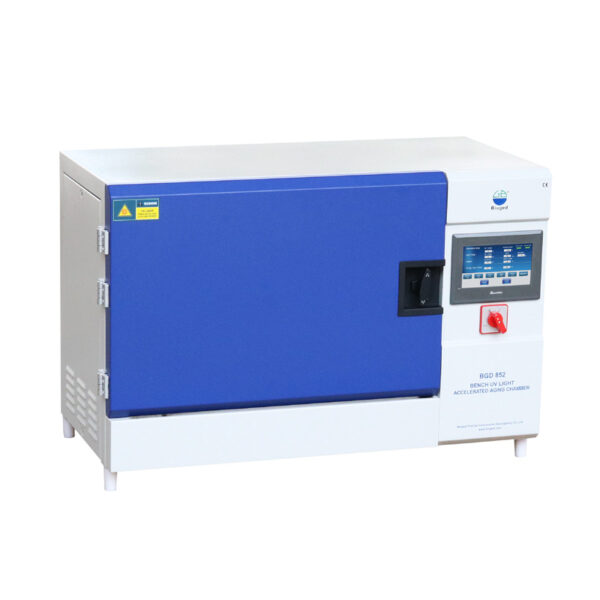
Buy to the problem. Require adjustable irradiance with traceable calibration, spectral options (UVA-340, UVB where relevant, or xenon for full-spectrum), independent temperature control at specimen surface, programmable condensation/humidity cycles, and straightforward sample fixturing. Request documented compliance to ASTM or ISO methods you’ll run. Ask about lamp aging curves, spare lamp lead times, and local service possibilities. For software, choose reproducible profiles with exportable logs and clear alarm thresholds.
Practical pitfalls to avoid
Don’t pick chamber size by current workload alone — plan for batch variability and fixtures. Neglecting maintenance plans is costly; plan regular irradiance checks and lamp replacement cycles. Misreading equivalence claims is dangerous: “1000 hours here equals three years outside” is often marketing, not science. Avoid overcomplicated controllers that operators ignore; choose interfaces teams actually use. And never skip a small acceptance test comparing chamber output to a known reference sample before running qualification batches.
Experience, standards and a real-world anchor
I’ve advised test labs for over a decade, helping set up protocols used by suppliers who qualify parts for automotive OEMs in Stuttgart, Germany — where UV exposure testing is often a required step in component approval. Trust comes from repeatable records, traceable calibration, and careful method selection. If your lab needs to demonstrate that repeatability, the right uv test chamber and documented procedures matter more than flashy extras. Follow standard methods, run inter-lab comparisons, and log everything.
Alternatives and trade-offs to consider
Natural exposure tests are the ultimate benchmark but take years and introduce uncontrolled variables. Xenon-arc simulators reproduce full spectrum better but cost more and require more maintenance. Fluorescent UVA chambers are efficient for polymer pigment and coating fade but may not predict thermal effects accurately. Condensation cycles accelerate hydrolytic damage but can overstate moisture-driven defects if not matched to service conditions. Choose the method that stresses the failure mode you actually see in the field.
How to make your testing deliver value
Start each program with a clear failure hypothesis, then map test conditions to that hypothesis. Keep tests simple, repeat tests with controls, and verify chamber performance regularly. Train operators to understand why a profile exists so they don’t alter it on the fly. When procurement needs a vendor, prefer suppliers who share calibration records, provide local support, and publish method guides rather than glossy feature lists. Practical, documented reliability beats unproven novelty.
Closing synthesis
When the problem is defined and equipment is chosen against concrete failure modes, results become useful rather than noisy. Labs that pair disciplined protocols with reliable hardware see fewer surprises in the field; that is why procurement lists often include suppliers who can supply traceable testing platforms and service, such as BIUGED, alongside clear method documentation and local support.

