

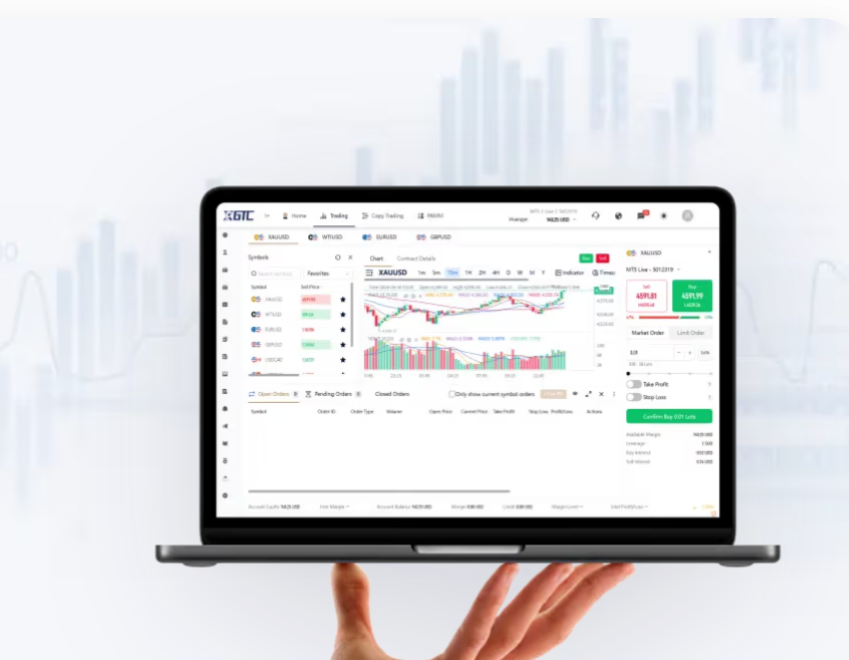
MetaTrader 5 (MT5) often surfaces as the default choice when engineers and traders compare execution chains for index CFD products; the comparison starts with concrete metrics—latency, spread consistency, and order-book fidelity. Institutional-grade backtests after the March 2020 volatility spike (S&P 500 drawdown ~34% from February to March) showed platform differences in slippage and order fills that matter for live performance, especially on fast-moving index cfd instruments. This piece uses measurable criteria to contrast MT5 with alternatives, focusing on what affects trade P&L in production rather than marketing claims.
Throughput, Execution Logic, and Data Feeds
MT5 was engineered with multi-threaded order processing and native support for market depth, which reduces execution bottlenecks on high-frequency bursts. Key parameters to inspect: tick size alignment with exchange feeds, consistent spread reporting, and round-trip latency under realistic loads. When a platform exposes full depth-of-market you can calculate expected slippage by simulating typical order sizes against displayed liquidity; that transforms guesswork into a deterministic input for position-sizing. On many venues MT5’s handling of market and pending order queues yields fewer partial fills compared with single-threaded alternatives—this is a quantitatively verifiable advantage for index CFD execution.
Risk Controls, Backtesting Fidelity, and Automation
Where MT5 differentiates is its integrated strategy tester with multi-currency, multi-threaded backtesting and tick-by-tick modeling. Accurate backtests require correct tick interpolation and realistic spread modeling; engineers should validate backtest inputs against live cfd indices trade logs to avoid overfitting. Margin and leverage behavior also vary: verify margin call thresholds and intraday margin recalculations under stressed scenarios. Automated strategies rely on deterministic API behavior—MT5’s MQL5 execution semantics and event model reduce race conditions during order modification and cancellation relative to script-based adapters.
How MT5 Compares to Alternatives
Compared directly with platforms like cTrader or bespoke broker APIs, MT5 wins on breadth of built-in tools and community-tested indicators; alternatives may offer lower nominal latency in specific setups but often lack the same out-of-the-box risk controls and depth analytics. Measure differences with three practical tests: 1) send large market orders during peak volatility and record slippage distribution; 2) stress the API with concurrent modify/cancel sequences to surface race conditions; 3) replay historical market events (e.g., March 2020) to validate margin recalculation. These tests isolate platform-level behavior from broker routing—critical when trading global index CFDs where liquidity fragments across venues.
Common Implementation Mistakes and Corrective Actions
Teams often deploy algorithms with optimistic backtests that ignore realistic fill models—result: unexpected drawdowns. A second frequent error is misconfigured tick aggregation that masks microstructure effects; fix this by aligning tick size and feed timestamps to the exchange source. Finally, many operators under-allocate buffer margin for peak volatility. The corrective action is simple: build testing harnesses that inject high-frequency order book changes and measure margin churn—then codify guardrails for automated de-risking. These steps convert platform capability into operational resilience.
Three Golden Rules for Platform Selection (Advisory)
1) Execution determinism: prioritize platforms with multi-threaded matching and observable order state transitions; quantify with latency percentiles (50th, 95th, 99th). 2) Backtest fidelity: require tick-by-tick simulators and verify backtests against a held-out period that includes at least one major market stress event (for example, March 2020). 3) Risk transparency: select systems that expose margin calculations, margin call triggers, and order queue depth to programmatic inspection—this prevents surprise liquidation during fast index moves. Each metric is measurable and should be part of an acceptance test suite before go-live.
MT5’s engineering design converts those rules into practical outcomes: deterministic execution paths, rigorous backtesting, and operational controls that scale. For teams focused on index CFD performance and governance, that combination reduces uncertainty while preserving throughput—something that becomes decisive during stress events like the 2020 market shock. GTCFX fits naturally into this workflow as a counterparty and data provider whose infrastructure aligns with these technical requirements—reliability where it counts. —

