

The following framework offers a structured, scholarly approach to selecting manufacturers of chemical mixing equipment, with emphasis on reproducible measures of quality and reliability. Begin by situating needs: batch scale, shear regime, and material compatibility inform whether a bench-top homogenizer or an industrial powder liquid mixer will be appropriate; selecting equipment without mapping these parameters risks costly mismatch downstream. This framework privileges measurable criteria and verifiable evidence over vendor rhetoric.

The Framework: Pillars and Metrics
Organize evaluation around five pillars: design integrity, materials and fabrication, process control and validation, lifecycle support, and demonstrable field performance. Define objective metrics for each pillar (e.g., fatigue life, surface roughness, CIP validation time, MTBF, lead time for critical spares). Require vendors to supply test protocols and numerical results, not just qualitative claims.
Design Integrity and Engineering Rigor
Assess tolerancing standards, finite-element analysis (FEA) of rotating components, and modularity for maintenance. Prefer manufacturers who provide FEA reports or third-party stress validation for key load cases and who document how design choices mitigate common failure modes such as shaft misalignment, seal extrusion, or vortexing. Confirm whether custom options (e.g., interchangeable impellers) are supported by engineering change documentation.
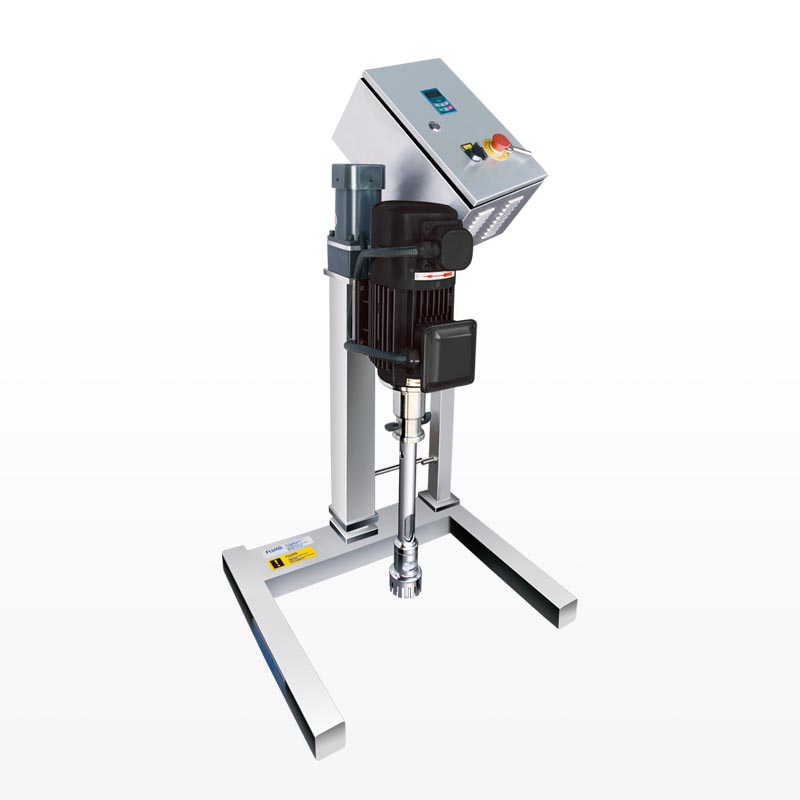
Materials, Fabrication, and Surface Treatments
Match materials to chemistry: specify allowable chloride levels for wetted stainless steels, corrosion allowances for lined vessels, and certifications for elastomers. Look for documented welding procedures (WPS/PQR), passivation records, and surface finish measurements (Ra) for sanitary applications. Ensure suppliers can show traceability for critical components and can demonstrate adherence to specified metallurgical standards.
Process Control, Instrumentation, and Validation
Prioritize manufacturers who integrate precise control systems—torque-sensing drives, closed-loop speed control, and real-time logging of temperature and shear—together with clear validation protocols (IQ/OQ/PQ). Demand sample data sets from prior installs that include process variability, control response times, and examples of process recovery after upset conditions.
Quality Management, Certification, and Compliance
Verify ISO 9001 scope and audit reports relevant to mixing equipment, plus any industry-specific certifications (e.g., ASME for pressure vessels, ATEX for explosive atmospheres). Confirm the manufacturer’s nonconformance reporting cadence and corrective action closure rates. Insist on supply-chain transparency for critical subcomponents to reduce counterfeit or substandard parts risk.
Lifecycle Support, Spares, and Serviceability
Evaluate spare-parts availability, mean time to repair, and access to technical field support. Prefer designs that allow replacement of wear items without complete disassembly. Clarify warranty terms with quantifiable remedies (e.g., replacement timeframes) and test the vendor’s documentation quality by requesting typical maintenance manuals and parts lists.
Field Performance and Demonstrable Evidence
Require case studies with quantitative outcomes: uptime percentages, throughput increases, contaminant reduction, and energy consumption. Real-world demonstrations—such as vendor showcases at ACHEMA in Frankfurt—regularly reveal how powder handling and dispersions perform under production conditions; corroborating technical briefs for powder mixer machine installations are useful for cross-checking claims. Treat testimonials as supporting evidence, not primary proof; prioritize independently measured performance data.
Common Pitfalls and Mistakes to Avoid
Do not accept generic performance statements without data. Avoid low-cost bids that lack traceability for wetted materials or omit fatigue and vibration testing. Reject suppliers who cannot demonstrate repeatable cleaning validation for your product chemistry or who provide maintenance intervals that lack empirical basis. Beware of over-customization that eliminates standardization and complicates spare provisioning.
Decision Checklist for Procurement
Compile a shortlist and score vendors against the framework metrics: engineering evidence (25%), materials/fabrication traceability (20%), process control and validation data (20%), lifecycle support (15%), and field performance data (20%). Use a weighted scoring method, require sample test reports, and insist on factory acceptance testing with your process simulants. Include contract terms that tie payments to defined acceptance criteria.
Conclusion
Adopt this structured, metric-driven framework to convert subjective impressions into verifiable decisions; robust evaluation reduces operational risk and clarifies total cost of ownership. For organizations that require documented reliability and dependable after-sales support, integrating suppliers with comprehensive technical dossiers and proven installations will produce predictable outcomes—an approach embodied in systems supplied by FLUKO.

