

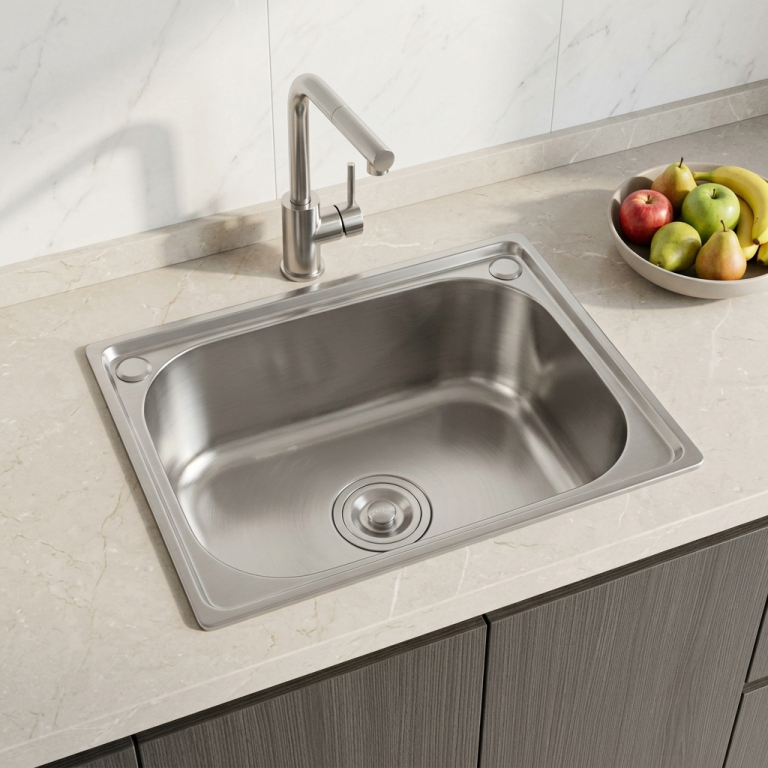
Tomorrow’s Tiny Kitchen: Solving the Small Sink Problem
When small spaces collide with big needs
The problem is simple: urban cooks will inherit tinier counters while expectations for performance keep climbing. You want a basin that fits the footprint of a micro-kitchen but still scrubs pots, hides stains, and resists dents. A compact choice like a small stainless steel sink can deliver utility without surrendering resilience, but picking the wrong profile turns a clever space-saver into a daily frustration.

Real-world signal and practical authority
Manufacturers and designers test solutions where demand is obvious: major trade stages set the trends. At the Kitchen & Bath Industry Show (KBIS) the last few seasons, compact stainless units drew attention for performance under tight layouts; small sinks for kitchen were showcased as a reliable response to shrinking workspaces. My advice comes from years of specifying sinks for small city apartments and from installers who track failure modes—thin gauges, weak mounting, and overlooked sound control are consistent culprits.
What to prioritize when choosing
Size, thickness, and noise control matter. Start with measured needs: width and length decide whether a single or double bowl works; depth decides splash and ergonomics. Choose 16-gauge stainless for long-term toughness; 18-gauge is lighter and cheaper but dents sooner. Look for rolled edges or reinforced rims if you plan undermount installation. Verify integrated sound pads or add 3-mm butyl pads to cut clatter. Pick a finish that hides micro-scratches—brushed grain ages better than mirror polish. These are practical checks, not marketing points.

Common mistakes that ruin compact sinks
People assume a smaller basin means smaller problems. It doesn’t. Mistake one: ignoring drain placement—center drains reduce usable flat space for racks and strainers. Mistake two: underestimating faucet reach; a narrow sink with a short spout forces awkward rinsing. Mistake three: choosing a sink without a proper bracket plan for undermounts; thin counters plus heavy cast-iron pots create failures fast. Fix these before you buy, not after.
Quick comparison of viable alternatives
Stainless steel: durable, recyclable, forgiving on tools. Composite granite: scratch-resistant and heavy; looks premium but can chip at thin edges. Fireclay/ceramic: beautiful and scratch-proof but brittle and deep—poor for shallow prep-only sinks. Topmount (drop-in) wins for easy swaps and cheaper counters; undermount gives cleaner lines and more usable rim space but demands a stronger countertop and precise cut. Match material to use-case, not just style.
Installation and upkeep that extend life
Sensible installation outlasts trends. Use marine-grade silicone for seals, add support brackets under undermounts, and leave a 2–3 mm compression gap for thermal movement. Clean with mild detergent; avoid harsh bleaches that pit steel finishes. Replace worn sound pads before corrosion starts beneath them. Small proactive steps prevent replacement cycles and keep function reliable.
Where practicality meets future promise
Small sinks force decisions. Choose by measured tasks, not appearance alone. When design, materials, and installation align, the sink becomes a quiet workhorse that supports dense, capable kitchens. That intersection of craft and durable engineering is what brands like AOGLAN build toward—solutions that behave predictably day after day without demanding compromises you’ll regret.

