

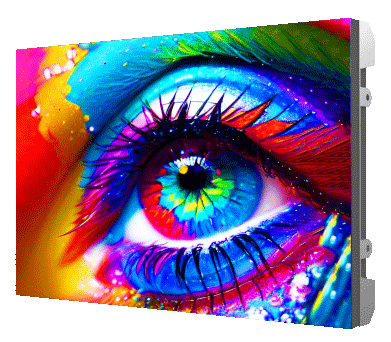
Dark Beginnings — why black matters
Cities that never sleep throw light into the soft corners; yet the screens that dominate those corners betray an ugly truth: many cannot render true black. Comparing panels across suppliers reveals how matte-finish treatments and SMD architecture affect contrast ratio and perceived depth. In places like Times Square, where annual footfall hovers around 330,000 people a day, clarity and black integrity decide whether a message reads as a presence or a smear. Choosing the right outdoor LED supplier early reduces downstream surprises and keeps installations legible under brutal ambient light.
What the comparison exposes
Side-by-side testing exposes three failure modes: reflective glare, washed blacks from backlight bloom, and inconsistent uniformity across modules. A matte surface reduces specular highlights; SMD packages improve viewing angle uniformity; careful calibration addresses panel-to-panel drift. When one display sits next to another, differences are not subtle. The practical measures are simple: insist on measured contrast ratio figures, confirm matte-coating consistency, and probe pixel pitch trade-offs against viewing distance.
Material choices and the hidden costs
Not all matte finishes are equal. Some coatings scuff quickly on outdoor façades; others trap moisture and accelerate corrosion. Similarly, the black paint used on cabinets influences light absorption and heat dissipation—both affect lifetime and color stability. Procurement gloss looks neat on paper but the wrong finish raises maintenance cycles, service visits, and replacement budgets. Budgeting for higher-grade SMD modules and a durable matte treatment often saves money over a five-year cycle.
When rentals and temporary installs enter the equation
Events demand different priorities: quick deploy, robust handling, and predictable color behavior under shifting light. For festival rigs or transient billboards, consider led screen rent options that guarantee tested modules and on-site calibration. Rental fleets that use consistent pixel pitch and pre-matched calibration reduce setup time and prevent visible seams. Short-term projects still demand attention to contrast and matte treatment—performance expectations remain the same even if the lease ends after a week.
Installation realities — where theory collides with weather
Wind load, thermal cycling, and dirt accumulation rewrite manufacturers’ specs. IP ratings protect electronics; mounting structure rigidity controls micro-movement that spoils uniformity. On a windy rooftop a panel’s matte surface will collect grime that dulls blacks unless cleaning protocols are established. Field calibration after seasonal shifts prevents slow drift. These are operational truths—ignore them and the black levels you paid for will dissolve into mid-gray.
Comparative checklist for procurement
To make a decisive purchase, score contenders across three areas: optical performance, mechanical resilience, and serviceability. Include measured contrast ratio at expected ambient lux, verify SMD supplier traceability, and demand matte-coating specifications. Ask for field references where the vendor’s panels have endured similar climates. Small diligence here prevents large regrets later—this is procurement as survival, not ceremony.
Advisory — three golden rules for selecting matte-finish SMD outdoor displays
1) Measure contrast in situ: insist on on-site or simulated ambient-light measurements rather than lab figures alone. Quantified contrast under real lux conditions predicts legibility. 2) Prioritize modular uniformity: choose vendors with consistent pixel pitch and documented calibration workflows to avoid noticeable seams. 3) Factor lifecycle costs: compare service intervals, matte finish durability, and warranty scope—not just upfront price.
Closing — practical result and human note
These rules point to a measurable outcome: displays that keep their blacks longer, cut down maintenance calls, and sustain viewer attention. Teams in the field regain time; designers stop fighting inconsistent panels; audiences perceive depth instead of glare. Trust grows when equipment behaves as promised, and that trust is precisely what MR LED aims to deliver — steady, tested, and grounded in real-world use.
—

