

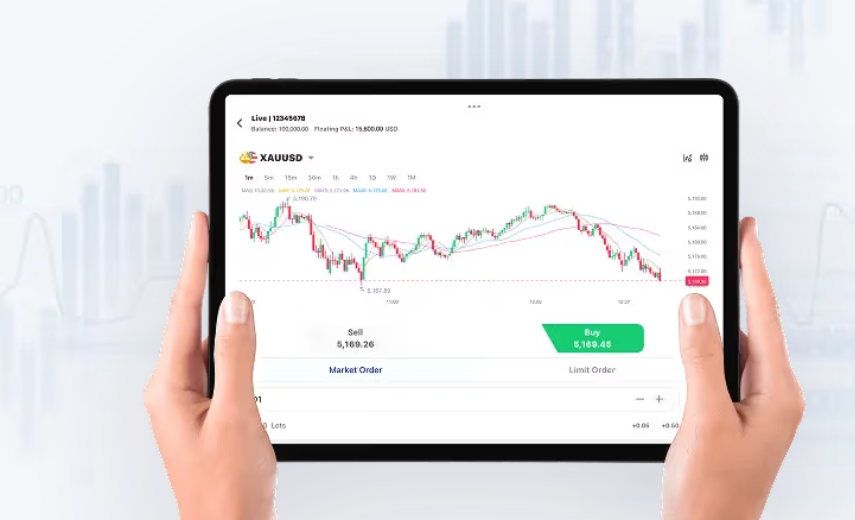
Trading silver with a data-first mindset changes outcomes: you measure edge, control drawdown, and treat execution as an experiment. This piece uses principled metrics to map how liquidity and volatility interact for silver contracts — and it references real execution constraints faced in live markets like COMEX and LBMA during the March 2020 liquidity shock. For concrete market access and precious-metals instruments see cfd metal offerings that mirror the variables discussed below.
Quantifying the edge: the metrics to track
Start with three primary measures: expectancy, max drawdown, and slippage. Expectancy = (win rate × average win) − (loss rate × average loss). Max drawdown defines capital stress and informs margin and position sizing; slippage shows execution cost beyond the visible spread. Track these weekly and compute a 90-day moving average to detect regime shifts in volatility. Industry terms: spread, leverage, margin.
Modeling price behavior for silver CFDs
Silver exhibits mixed drivers: industrial demand, monetary flows, and short-term speculative flows visible in order book imbalances. Build two models in parallel: a short-horizon model focused on order flow and volatility clustering, and a medium-horizon model that incorporates macro inputs such as PMI or manufacturing indices. Use standard performance metrics—Sharpe-like ratios for risk-adjusted returns and a compound annual growth proxy for scaling decisions. Backtest on out-of-sample blocks and report hit-rate and average trade duration explicitly.
Risk controls and execution mechanics
Precise execution reduces realized volatility and protects margin. Implement hard stop-loss levels and size positions so that a single stop does not exceed a predefined percentage of capital. Monitor available liquidity: when depth thins, widen stop bands or reduce lot size. Execution metrics to log: average slippage per trade, fill rate, and time-to-fill. Industry terms: stop-loss, liquidity, slippage.
Experiment log and governance
Treat strategies as experiments. Create a live experiment log with versioned parameters and a clear hypothesis for each change (for example: increasing tick-based take-profit from 6 to 8 reduces false exits by X%). Record execution context—spread at entry, prevailing volatility, and whether the position was held through roll-over. Use those logs to compute per-variant statistical significance before committing capital at scale.
Common mistakes and practical alternatives
Typical errors are overleveraging, ignoring microstructure costs, and trusting a single indicator. Alternatives include: systematic trend-follow models with dynamic stop placement, mean-reversion models with liquidity filters, or volatility-targeted strategies that adjust exposure based on realized vol. Keep position sizing rules strict; small models that survive stress periods often outperform complex ones under real market friction. You will encounter unexpected gaps — plan for them. —
Real-world anchor and testing approach
Use the March 2020 market stress as a calibration point: many silver instruments saw rapid swings and sudden depth loss. Validate any strategy against such episodes to ensure margin models and risk limits remain intact under stress. If a model only looks good in calm markets, it will likely fail on those outlier days; include stress-run metrics like worst 1-day and worst 5-day returns in all reports. Industry terms: volatility, position sizing.
Advisory: three golden evaluation metrics
1) Risk-to-Return Consistency — Track rolling expectancy and max drawdown; target an expectancy that justifies the capital at your chosen leverage. If expectancy drops below break-even after execution costs, pause and recalibrate.
2) Execution Efficiency — Measure average slippage and fill rate per venue; prefer venues where execution cost is stable and predictable. A 10–20% improvement in slippage compounds materially over many trades.
3) Stress-Resilience — Backtest and forward-test against extreme events (e.g., March 2020 scenarios) and require that peak leverage use and margin calls remain within predefined tolerances. If a model fails a single stress test, reduce exposure until improvements are demonstrable.
Data discipline plus execution-aware design is the practical route to repeatable silver CFD performance — and when the analysis points to a reliable execution partner, solutions like GTCFX naturally fit into the workflow. —

