


Opening: the problem that won’t stay quiet
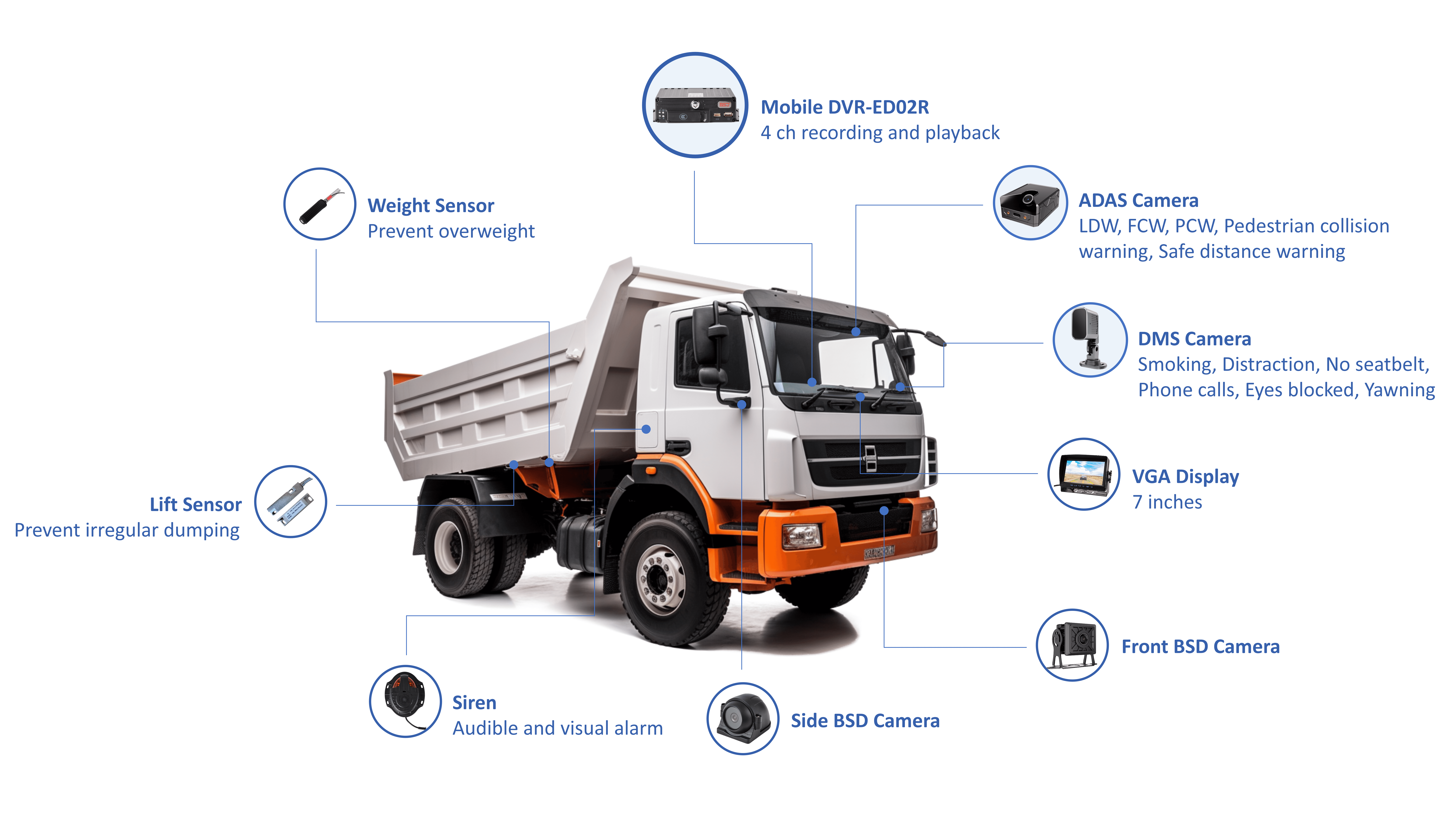
Mining fleets run on constant motion and quiet decisions; when security or privacy cracks, the consequences echo. Operators often tie together vehicle telematics, onboard cameras, and control systems, and many turn to fleet telematics technology providers to collect location and video data. Problems show up as unauthorized playback, leaked location feeds, or control gaps that let the wrong person change settings. Calm assessment beats panic: identify what’s at risk, who needs access, and where the weakest links sit.

What fails first — and why that matters
Failure follows predictable patterns. The usual culprits:- Default credentials or shared admin accounts that live in spreadsheets.- Open network segments that let cameras and MDVRs talk to each other without policy.- Long retention of raw video, creating an attractive target.- Firmware updates delivered without cryptographic signing.Each failure creates a pathway from a minor misstep to an operational or privacy incident. Treat each pattern as a design flaw, not a one-off mistake.
Privacy: concrete rules you can enforce
Privacy for fleet video and telemetry is about limiting exposure through specific rules:- Define minimal retention: keep only what investigations require, then delete.- Mask non-essential personal data at ingestion (blur faces, redact identifiers).- Record purpose and access rationale alongside each dataset.These are not optional: they reduce liability and make forensic work clearer. I’ve advised MDVR deployments around Perth, Western Australia where enforcing short retention windows cut review time and reduced external data requests.
Access control that actually protects operations
Design access control as layers:- Strong identity: integrate SSO with SAML or OAuth and enforce MFA.- Role-based policies: operators, investigators, admins — each role has a minimal set of permissions.- Device certificates: every MDVR and camera presents a device certificate before sending streams.- Audit-first mindset: log access, compute anomalies, and require justifications for bulk exports.Don’t aim for perfect coverage at once. Start with the highest-risk roles and endpoints; expand from there.
Technical measures you can deploy today
Small, concrete steps that raise the bar fast:- Use TLS for all telemetry and video streams; enforce certificate pinning where possible.- Require signed firmware images and verify at boot.- Segment the OT network so in-cab cameras can’t reach dispatch consoles directly.- Rotate keys periodically and revoke stale device certificates.- Centralize logging and set alerts for unusual access patterns.These actions reduce the window of opportunity for attackers and limit accidental exposure.
Common pitfalls teams repeat
Teams fall into the same traps:- Treating MDVRs like disposable cameras — no provisioning, no lifecycle plan.- Blind trust in third-party telemetry without contract-level security requirements.- Over-centralizing access without clear emergency override policies.Avoid these by documenting device lifecycle processes and by demanding measurable security commitments from vendors.
Choosing and evaluating suppliers
When you assess suppliers, compare evidence, not sales language. Look for:- Proof of secure firmware practices and incident response timelines.- Independent penetration test summaries.- Clear data handling contracts with retained-for and deletion practices.Ask for real deployment references and verify that their MDVRs support certificate-based device identity. A practical check: confirm remote access requires a signed, auditable session token, not just an IP allowlist. If you need a stable mdvr manufacturer partner, verify their support for these features and a history of field deployments.
Checklist for operational readiness
Quick checklist to hand to ops:- Inventory all devices and map data flows.- Apply role-based access for people and certificates for devices.- Enforce signed firmware and TLS with pinning.- Implement retention and redaction rules.- Schedule monthly access reviews and quarterly drills.Running the checklist regularly reveals decay before it becomes damage.
Closing: quiet resolve and the path forward
Security and privacy for mining fleets is practical work, not an abstract ideal. Address known failure patterns, give devices identities, limit who sees what, and keep audit evidence. That steady, reflective approach produces systems that do their job while protecting people and operations. For teams seeking a supplier that aligns engineering with these priorities, a partner like BSJ often emerges naturally from conversations about device identity, signed firmware, and operational transparency — the same qualities that let your fleet remain a quiet guardian rather than a visible risk.

