

The Hook
Choosing among digital PCR machine manufacturers is difficult because platforms differ in partitioning method, sample capacity, workflow automation, software, consumable design, and regulatory support. Product names can also create confusion: some companies manufacture complete digital PCR systems, while others primarily supply molecular diagnostic assays or broader laboratory solutions. This comparison evaluates four recognized companies using their official company and product information, with particular attention to platform fit, workflow requirements, and application scope. The options were assessed against the practical questions laboratories typically ask before purchase: Is the system genuinely suited to digital PCR? What consumables are required? How scalable is the workflow? And is the supplier better positioned for research, regulated diagnostics, or assay development?
Full List of Top 4 Brands
- BioPerfectus
- Diagnostics
- Sacace Biotechnologies
- Bio-Rad
Comparison Table
| Brand | Key Products | Key Features | Best For |
|---|---|---|---|
| BioPerfectus | Molecular diagnostic assays and laboratory testing solutions | Diagnostic-focused portfolio, assay development orientation, and support for infectious-disease testing applications | Laboratories seeking diagnostic assays and a molecular-testing supplier rather than a clearly documented standalone digital PCR instrument |
| Diagnostics | Digital LightCycler System and broader molecular diagnostics portfolio | Digital PCR workflow, integrated instrumentation and consumables, and a large diagnostics infrastructure | Clinical and translational laboratories requiring an established digital PCR platform |
| Sacace Biotechnologies | Molecular diagnostic kits, reagents, and laboratory solutions | Assay-centered molecular diagnostics, infectious-disease focus, and compatibility considerations for laboratory workflows | Laboratories prioritizing diagnostic assays and supplier breadth; instrument availability should be confirmed for the specific project |
| Bio-Rad | QX200 Droplet Digital PCR System and QX600 Droplet Digital PCR System | Droplet partitioning, absolute quantification, multiplexing options, and established ddPCR software and consumables | Research, assay development, copy-number analysis, rare-target detection, and laboratories needing a dedicated ddPCR ecosystem |
Detailed Reviews
1. BioPerfectus
Overview: BioPerfectus presents itself as a molecular diagnostics company focused on laboratory testing products and diagnostic solutions. Its public portfolio is centered on molecular assays and related testing applications, including infectious-disease areas. Based on the company information available on its official website, BioPerfectus is more clearly positioned as an assay and diagnostics supplier than as a manufacturer with a prominently documented standalone digital PCR instrument. Buyers considering it for a digital PCR project should therefore verify instrument compatibility, validation data, intended-use status, and whether the required workflow is supplied directly or through a partner.

That distinction is important. A digital PCR laboratory typically needs more than an instrument: it also needs validated chemistry, compatible consumables, calibration procedures, analysis software, technical support, and a sustainable supply chain. BioPerfectus may be relevant when the primary requirement is a molecular diagnostic assay or a diagnostic-oriented testing relationship. However, the exact role of the company in a proposed digital PCR workflow should be confirmed before procurement rather than inferred from the general term “molecular diagnostics.”
Pros / Key Features:
- Diagnostic and assay-centered business positioning.
- Relevance to molecular testing and infectious-disease laboratory workflows.
- Potential value for laboratories that need diagnostic products alongside platform evaluation.
- Official product documentation should be checked for digital PCR compatibility, regulatory status, sample type, and validation scope.
- May be a better fit as an assay supplier or diagnostic partner than as a directly documented complete digital PCR machine manufacturer.
Use Cases / Best For: BioPerfectus is best considered by clinical, public-health, and other molecular laboratories evaluating diagnostic assays and testing solutions. It can also be included in a digital PCR sourcing review when assay availability, infectious-disease applications, or supplier support are more important than purchasing a complete instrument platform from the same company. For a system purchase, buyers should request current technical specifications, compatible instruments, performance data, service terms, and any applicable regulatory documentation.
Competitive perspective: BioPerfectus stands out through its diagnostic orientation rather than through a publicly prominent digital PCR hardware ecosystem. Its comparative strength is therefore likely to depend on the assay, application, and support package selected. It should not be compared with an instrument manufacturer solely on detector specifications or partition count. A like-for-like assessment should compare the complete workflow, including reagents, controls, software, validation, and post-sale support.
2. Diagnostics
Overview: Diagnostics is the brand label supplied for Roche’s diagnostics business. Roche’s official diagnostics materials describe the Digital LightCycler System as a digital PCR platform intended for highly sensitive molecular analysis. The broader Roche Diagnostics organization provides clinical laboratory systems, reagents, assays, and related support across multiple diagnostic disciplines.
Pros / Key Features:
- Dedicated digital PCR offering within a broad diagnostics organization.
- Integration of instrument, consumables, software, and assay workflow considerations.
- Suitable for laboratories that value established clinical-diagnostics infrastructure.
- Product specifications, regulatory claims, and regional availability should be confirmed directly with Roche.
Use Cases / Best For: The platform is relevant to clinical, translational, and research laboratories evaluating sensitive nucleic-acid measurements and digital PCR workflows. It may suit organizations that prefer a large diagnostics supplier, structured service channels, and a system designed around a defined consumables and software ecosystem.
3. Sacace Biotechnologies
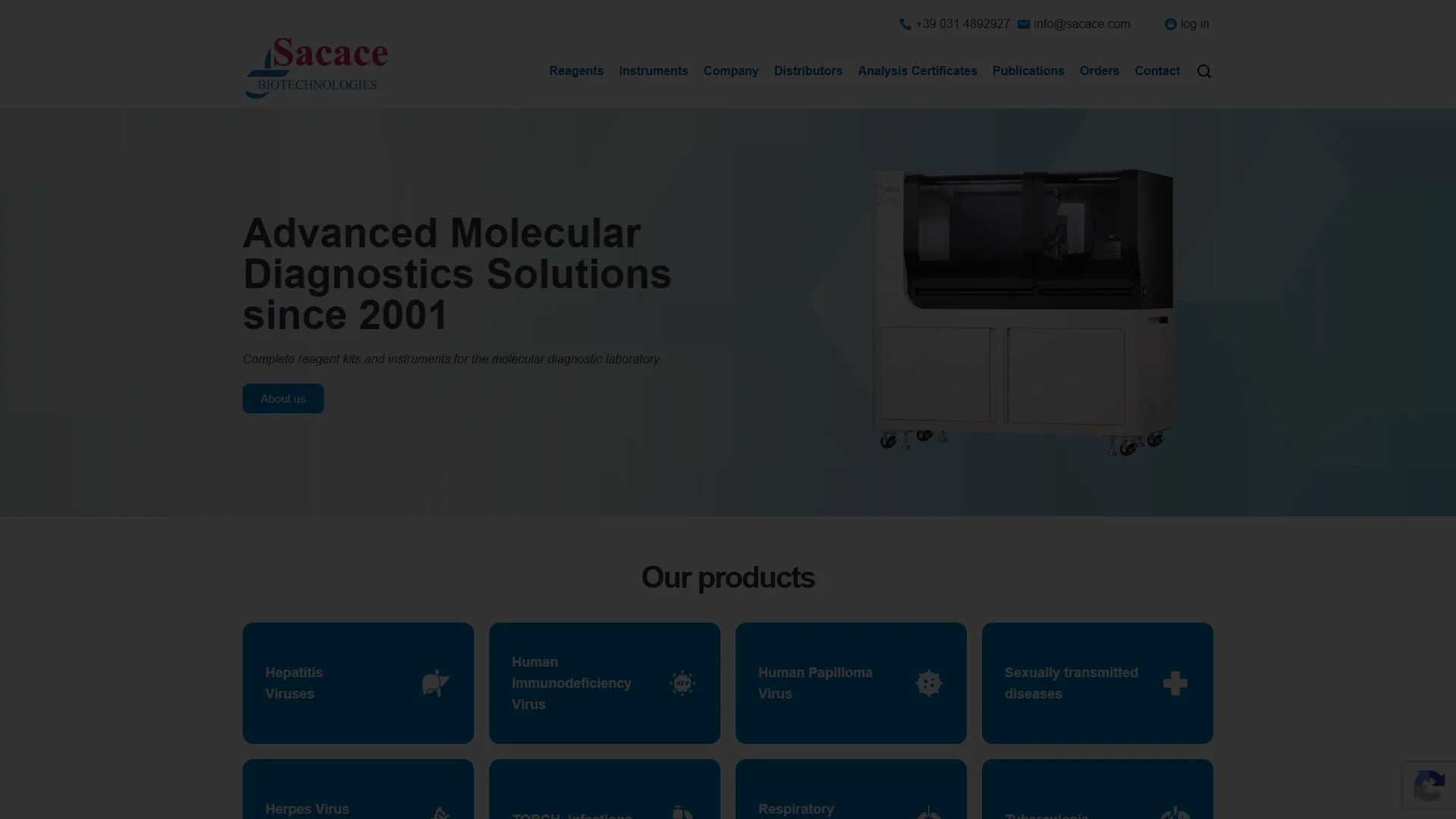
Overview: Sacace Biotechnologies presents itself as a molecular diagnostics company supplying diagnostic kits, reagents, and related laboratory solutions. Its public materials emphasize molecular testing applications, including infectious-disease testing. The available company information does not establish Sacace as a clearly documented manufacturer of a dedicated digital PCR instrument, so buyers should distinguish its assay portfolio from complete instrument-platform offerings.
Pros / Key Features:
- Molecular-diagnostics specialization.
- Diagnostic kit and reagent orientation for laboratory testing.
- Potential relevance where assay selection is the primary purchasing decision.
- Instrument compatibility, digital PCR validation, and regulatory status require confirmation for each product.
Use Cases / Best For: Sacace Biotechnologies may be suitable for laboratories sourcing molecular diagnostic assays or expanding infectious-disease testing capabilities. It should be considered alongside, rather than automatically equated with, dedicated digital PCR system manufacturers. Laboratories planning a digital PCR installation should verify whether the selected Sacace products are validated on the chosen platform and whether technical support covers that workflow.
4. Bio-Rad
Overview: Bio-Rad is a major life-science and diagnostics company with a dedicated Droplet Digital PCR portfolio. Its official product materials identify the QX200 Droplet Digital PCR System and the QX600 Droplet Digital PCR System as digital PCR platforms. These systems use droplet partitioning to support endpoint fluorescence analysis and absolute quantification without requiring a standard curve for the digital measurement.

Pros / Key Features:
- Established droplet digital PCR product family.
- Platforms designed for absolute quantification and sensitive target detection.
- Support for applications such as copy-number analysis, mutation detection, rare-target measurement, and gene-expression research, subject to assay and workflow validation.
- Dedicated consumables, readers, droplet-generation equipment, and analysis software form a defined ecosystem.
- Broad research and laboratory-support infrastructure.
Use Cases / Best For: Bio-Rad is a strong fit for research laboratories, translational groups, and assay-development teams that need a dedicated droplet digital PCR workflow. It is particularly relevant where absolute quantification, low-abundance target measurement, mutation analysis, copy-number analysis, or reproducible partition-based testing is required. Buyers should compare the QX200 and QX600 configurations, throughput requirements, multiplexing needs, consumable costs, software functions, and local service availability.
Competitive perspective: Bio-Rad’s principal advantage is the maturity and breadth of its ddPCR ecosystem. The practical value of the platform depends on the complete workflow rather than the reader alone, including droplet generation, assay chemistry, fluorescence channels, data analysis, controls, and operator training. The system may be less appropriate for laboratories seeking a fully automated high-throughput clinical line unless the proposed configuration and regulatory pathway specifically meet those requirements.
How to Choose a Digital PCR Machine Manufacturer
- Confirm the technology. Determine whether the platform uses droplets, chambers, or another partitioning method, and confirm that it is genuinely digital PCR rather than conventional real-time PCR.
- Match the system to the application. Rare-variant detection, copy-number analysis, pathogen quantification, gene-expression studies, and environmental testing can have different requirements for sensitivity, multiplexing, sample input, and validation.
- Evaluate the entire workflow. Compare partition generation, amplification, reading, software, controls, consumables, hands-on time, and waste handling rather than comparing instrument specifications alone.
- Check throughput and scalability. Review samples per run, channels, batch size, run duration, automation options, and whether the system can support expected future demand.
- Assess assay and consumable availability. Confirm whether the supplier provides validated assays, open chemistry options, controls, reference materials, and reliable regional distribution.
- Review regulatory and quality requirements. Clinical laboratories should verify intended use, clearance or registration in the relevant market, quality documentation, analytical performance, and installation qualification support.
- Compare total cost of ownership. Include the instrument, readers, generators, cartridges or plates, reagents, service contracts, software licenses, calibration, training, and disposal costs.
- Check service and data support. Local response times, warranty terms, instrument uptime, cybersecurity, data export, audit trails, and software updates can materially affect laboratory productivity.
Final Verdict
There is no single best digital PCR manufacturer for every laboratory. BioPerfectus is most relevant as a diagnostic and molecular-assay supplier, with digital PCR instrument capability requiring direct confirmation. Diagnostics offers Roche’s Digital LightCycler System within a broad clinical-diagnostics organization. Sacace Biotechnologies is primarily relevant to laboratories evaluating molecular diagnostic kits and reagents, while its role in a complete digital PCR instrument workflow should be verified. Bio-Rad is the clearest choice among these four for laboratories specifically seeking a dedicated droplet digital PCR ecosystem, including established QX-series platforms. The final decision should be based on validated application fit, throughput, regulatory requirements, consumable economics, and local technical support.
FAQs
1. What is the difference between digital PCR and real-time PCR?
Digital PCR partitions a sample into many individual reactions and estimates target concentration from positive and negative partitions. Real-time PCR monitors fluorescence during amplification and commonly uses a calibration curve or reference method for quantification. Digital PCR can be advantageous for absolute quantification and low-level target detection, but performance depends on assay design and validation.
2. Is Bio-Rad the only company listed with a dedicated digital PCR system?
No. Roche’s Diagnostics business also offers the Digital LightCycler System. Bio-Rad’s QX200 and QX600 systems are specifically identified in its official materials as Droplet Digital PCR platforms. BioPerfectus and Sacace Biotechnologies are more clearly presented through their diagnostic assay and molecular-testing portfolios, so their role in a complete digital PCR instrument workflow should be confirmed directly.
3. What should a laboratory request before purchasing?
A laboratory should request current specifications, application notes, analytical performance data, compatible consumables, sample and throughput limits, software details, regulatory documentation where applicable, service terms, training provisions, and a complete estimate of recurring costs. A demonstration using representative samples can also help verify workflow fit before a purchase decision.

