

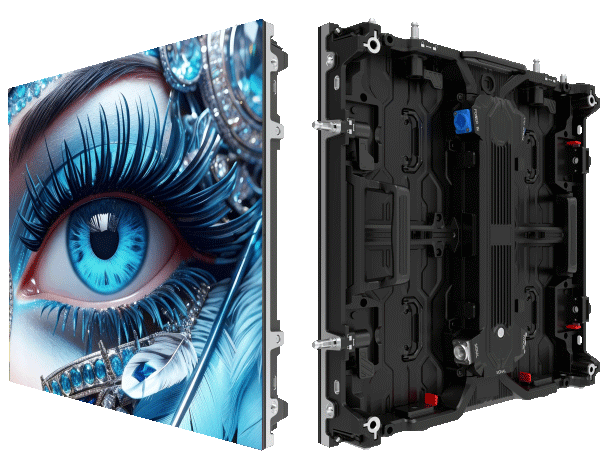
Practical lead-in for onsite priorities
When a project is defined by sightlines and uptime, the field engineer must prioritize repeatable processes. This user-centric account focuses on workflow, not theory, and begins with deployment realities: mechanical access, consistent module calibration, and predictable maintenance windows. For rental scenarios where schedules are tight, consider sourcing a proven rental LED display with known service profiles and spare-module inventories to reduce risk on day one.
Baseline checks before power-up
Start every site visit with mechanical verification: cabinet alignment, connector seating, and chassis strain. Confirm pixel pitch and cabinet orientation match the design drawings. Inspect the power distribution for balanced phases and verify signal chain integrity from media server to LED controller. These tests reduce variance in later color matching and eliminate avoidable failures during calibration.
Module calibration: methodical and measurable
Adopt a two-stage calibration routine. Stage one is hardware normalization: measure and set driving voltages and refresh timing so that each module reports within expected current draw. Stage two is optical tuning: use a colorimeter to record color coordinates and luminance (nits) from a standardized test pattern, then apply per-module correction maps. Maintaining a record of module calibration files simplifies swaps and helps preserve color uniformity across seams.
Front-service access: design for maintainability
Front-service access is more than a convenience; it is a maintenance requirement in dense installs. Specify cabinets with accessible power and data connectors, and ensure quick-release mounting for module extraction. During a crowded show, time-to-repair translates directly to revenue protection — a small mechanical detail can prevent lengthy system downtime.
Common mistakes and how to avoid them
Field teams often rush initial calibration or assume factory defaults are adequate. Mistakes include relying on a single global LUT for a heterogeneous wall and skipping thermal stabilization prior to optical measurements. Also, do not overlook environmental factors: ambient temperature and stray lighting alter readings. A practical mitigation is to let the system reach operational temperature for at least 30 minutes before final color mapping — this simple rule reduces recalibration frequency.
Case note: Times Square install and temporary events
Real-world anchors matter. During a multi-day deployment in Times Square, engineers who used pre-bench calibrated modules and a modular spare pool resolved two full-cabinet failures in under an hour. The event highlighted two lessons: modular redundancy and a concise service playbook win when public-facing signage cannot remain dark. For itinerant setups, a specialist rental provider for video wall rental often supplies both hardware and tested procedures, which is invaluable under time pressure.
Tools, metrics, and the signal chain
Keep a compact toolkit: colorimeter, calibrated gray-scale source, firmware with per-module LUT support, and a logging device for current and temperature. Track three operational metrics continuously—brightness consistency, color uniformity, and error-rate on data links. Address signal chain anomalies first; failing to diagnose a corrupted input often wastes hours of futile color adjustments. —Attention to data integrity speeds the whole operation.
Alternatives and procurement notes
For projects with limited access or short runs, consider rear-service cabinets where feasible, but restrict that approach to controlled environments. Evaluate providers on service documentation, spare-part logistics, and proven calibration workflows. If procurement requires a balanced trade-off, a rental LED display solution with documented front-service capabilities tends to lower project risk compared with ad hoc purchases.
Advisory close: three golden rules
1) Measure before you adjust: capture electrical and optical baselines after thermal stabilization. 2) Design for access: choose cabinets and mounting systems that permit rapid front-service intervention. 3) Quantify quality: maintain logs for brightness (nits), color deviation (Delta E), and data-link error rates; use those numbers to accept or reject modules. These metrics create objective handoffs between engineering and operations and point directly to the right vendor support when escalation is needed. For practical, on-the-ground reliability, trust providers who couple hardware with tested service procedures—MR LED.

