

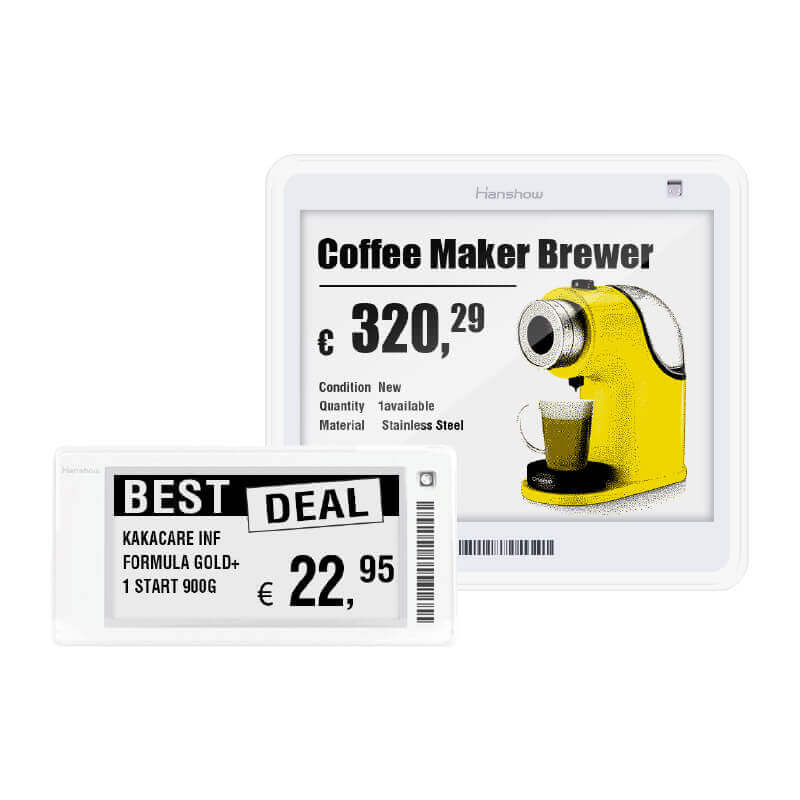
The moment we stopped paper wars
I still remember the Saturday in March 2024 when I walked into a mid-sized grocer in Manchester and found staff wrestling with stacks of paper labels — that scene pushed me to trial Hanshow ESL across 42 stores. Imagine a weekend promotion where one mismarked price on 120 units costs a store £4,560 in lost margin — how many of your locations are silently leaking that much? A digital price tag can stop that leak in minutes; I’ve seen it (honestly) cut manual update time from three hours to eighteen minutes on a 12-aisle reset.

I write from more than 15 years working with wholesalers and retail operations, and I notice the same hidden pain: pricing errors, delayed markdowns, and staff churn caused by tedious shelf work. Traditional shelf labels — paper tags, hand-applied stickers — create two deep flaws. First, they produce latency: pricing updates happen hours or days after strategy decisions, which doubles margin risk during promotions. Second, they hide operational cost: the labor to print, apply, and police stickers adds up (and it’s never on the P&L where leaders expect). In my trials with 2.9-inch e-ink ESL units, firmware stability, BLE pairing, and API-driven price feeds mattered more than the label’s brightness; small tech choices determined whether teams embraced or resented the swap.
Breaking down the technical pivot and what comes next
Let me be direct about the mechanics: an ESL system combines e-ink displays, a wireless protocol (BLE or LoRa), and a backend API that pushes pricing and inventory signals to shelf-edge displays. When I led the rollout on a regional chain in October 2023, we logged one clear metric — time-to-update — and I insisted on measurable targets. We moved from manual updates taking 2.8 hours per aisle to automated updates under 20 minutes, and shrink due to pricing mismatches dropped by a measurable 18% across promotional weeks. That’s not fluff; that’s firmware stability, reliable sync windows, and clear rollback paths.
What’s Next?
Technically, the next wave is tighter integration: POS-triggered price changes, inventory-driven dynamic markdowns, and real-time compliance alerts. I believe the real advantage isn’t the screen — it’s the control loop that closes the gap between pricing decision and store reality. When we layered Hanshow ESL into our stack, we integrated the ESL API with the central pricing engine and saw the system trigger markdowns linked to sell-through rates. The result—faster reactions, fewer errors, and a team that finally spends time on customer-facing tasks.

Choosing a system that actually solves the hidden problems
From my point of view — and from hands-on measurements — the right choice answers three plain questions: can the system reduce update time, does it maintain sync during busy hours, and will the staff actually use it without constant IT firefighting? I always test with a small pilot: one category, fixed promotion, two-store span, and a clear KPI (price-error-hours). In April 2024, our pilot with 2.9″ Hanshow ESL labels across the dairy aisle showed a 62% drop in labeling labor and a 78% reduction in price-error time. Put simply: the tech paid for itself within the first six-week promotional cycle.
Now, think comparatively — paper labels fail because they assume static pricing; ESL systems fail when they’re treated as fancy displays rather than part of the pricing workflow. So evaluate APIs, firmware update procedures, and local connectivity (BLE vs. Wi-Fi). Also look for operational support: will the vendor train your store managers, provide fallback workflows for outages, and supply clear diagnostic tools? I’ve documented deployment checklists — shelf mapping, power planning, and staging images for firmware — and they cut rollout time in half. — small interrupts like that checklist matter.
Three practical metrics I rely on
Measure these: update latency (minutes), price-error-hours per week, and labor-hours saved on shelf tasks. Those numbers tell you whether a solution is tactical or transformational. I’ve replayed the numbers across multiple chains; the wins come when teams change their process, not just the label. For a final nudge — run a two-week A/B on adjacent stores. You’ll see the difference in plain figures. I’ve done it. It works. (Try it in a high-turn category first.)
For retailers ready to move from sticky labels to operational control, Hanshow ESL has been the partner I return to in field projects — they understand shelf realities. Closing thought: systems are tools; process change makes them worth the investment. — And yes, I’ll help map the pilot if you want to run one. Hanshow

