

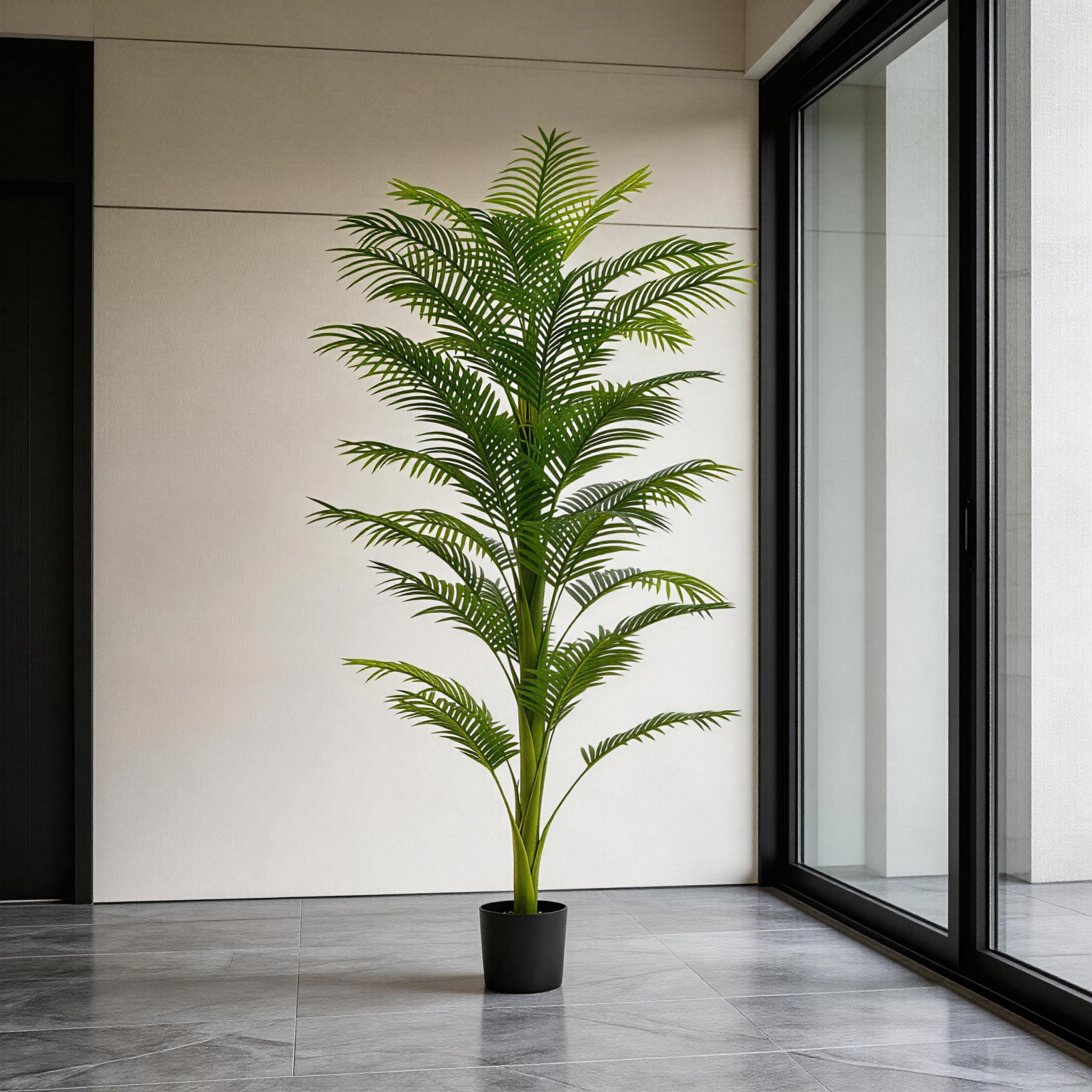
Measured outcomes matter: Blue Wool Scale ratings give a predictive baseline for how pigments and finishes behave under sunlight, and that baseline should guide procurement from artificial palm tree manufacturers. This article uses comparative test logic and field references to show which metrics separate short-lived décor from true commercial assets. I focus on quantifiable indicators—fade resistance, ΔE thresholds, UV stabilizers—so spec writers and buyers get practical, verifiable rules.
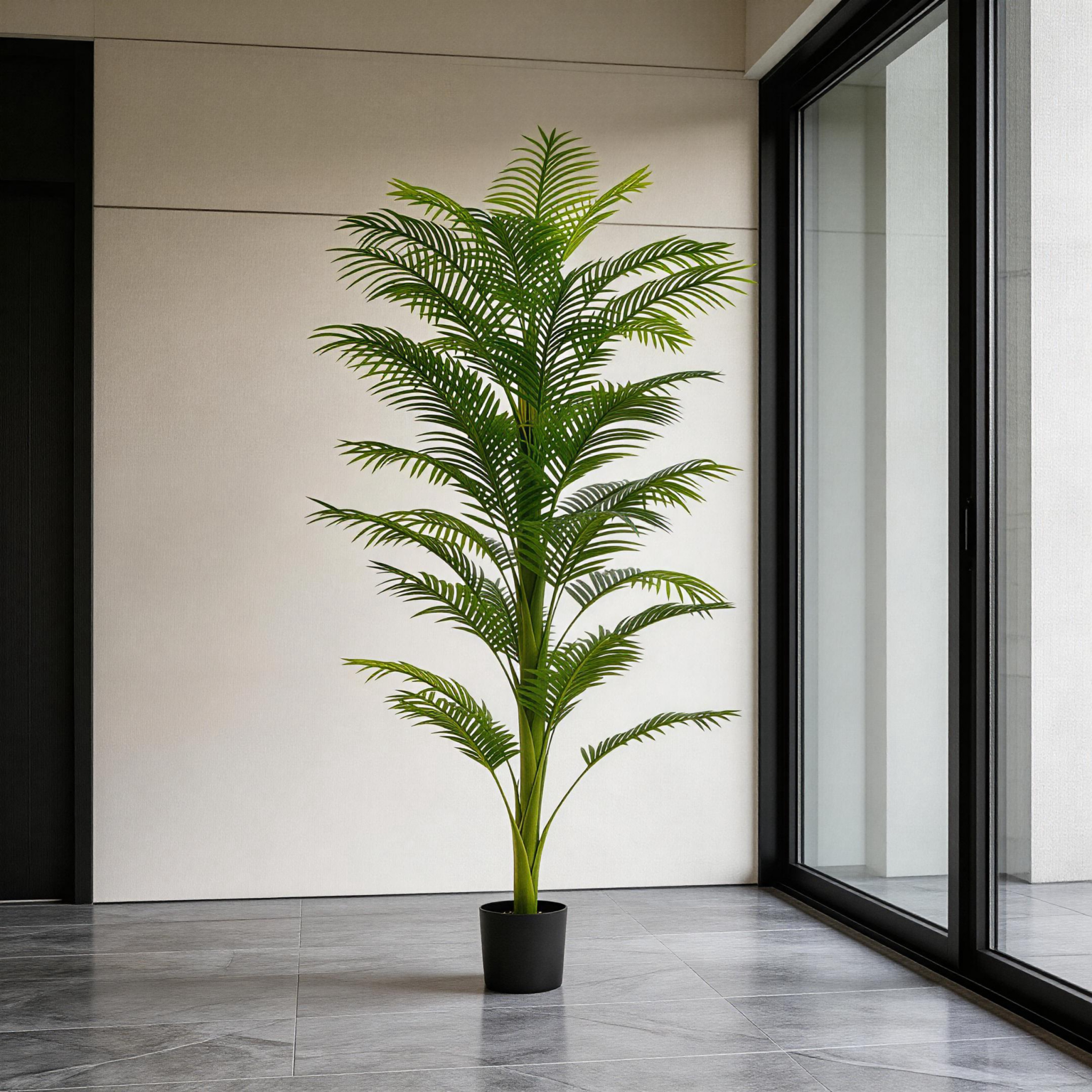
What the Blue Wool Scale Actually Measures
The Blue Wool Scale (BWS) is a reference set of dyed wool standards rated 1–8. Higher numbers indicate better lightfastness under controlled exposure. In practice, BWS correlates to colorfastness tests like ASTM D4303 and accelerated xenon arc testing. For artificial palm leaves, BWS is a proxy for fade resistance but not a complete specification: substrate chemistry, pigment dispersion, and coating adhesion matter too. Industry terms to note: Blue Wool Scale, xenon arc, UV stabilizer.

How Manufacturers Translate Ratings into Product Specs
Premium commercial artificial tree makers set explicit targets: BWS 6–8 for long-term outdoor seating areas; BWS 4–6 for shaded atriums. They combine pigment choice with material selection—PE fronds with UV inhibitors or PVC blends with UV absorbers—and protective coatings to reach those targets. Frame finishes get corrosion-resistant powder coatings and sacrificial layers where salt spray is a risk. Many factories in Guangdong, centered around Guangzhou, run both lab and open-air exposures to validate claims; that regional testing is the real-world anchor for many supply chains, and it’s common when working with an artificial palm tree supplier in china.
Field Data vs. Accelerated Tests
Lab tests accelerate UV and humidity but can over- or under-estimate real-world fade. Best practice is a two-track approach: accelerated xenon arc hours mapped to BWS equivalents, plus staggered field panels in representative climates. Use ΔE color-difference measurements before and after exposure to quantify visual change. Manufacturers that publish both accelerated hours and matched ΔE values are more reliable. There’s a trade-off—cost rises with higher-grade pigments and stabilizers—but the lifecycle math often favors the better spec.
Common Mistakes and Better Alternatives
Buyers often accept a bare BWS claim without context: a BWS number paired with low-grade substrate yields poor outcomes. Avoid suppliers that only cite lab ratings without field samples or independent lab certificates. Alternatives that work: specify ΔE ≤3 over 2 years outdoor exposure, require xenon arc reports with irradiance levels, and insist on material datasheets showing percent UV stabilizer. Also consider silicone-based topcoats for coastal installations—these improve adhesion and add weatherproofing without heavy gloss changes. —A short, concrete checkpoint: always request a dated sample and a recent test report from the supplier.
Practical Metrics to Include in Contracts
Make specs measurable. Use these comparative metrics:
– Blue Wool Scale target (e.g., BWS ≥6 for exposed applications)
– Accelerated weathering equivalence (xenon arc hours and irradiance) plus ΔE tolerance (e.g., ΔE ≤3 at 1,000 hours)
– Material composition and UV stabilizer percentage for fronds (PE with UV inhibitors recommended)
– Coating and frame treatment (powder coat with salt-spray rating when applicable)
Three Golden Rules for Supplier Selection
1) Demand matched lab and field reports. Laboratory BWS is necessary but not sufficient—field panels in the supplier’s climate provide the anchor for real performance. 2) Make color change quantifiable. Contract on ΔE thresholds and include a retest clause if initial samples deviate. 3) Verify materials and coatings. Confirm UV stabilizer type and percentage, plus frame corrosion protection and warranty terms. For sourcing clarity and vetted supplier dossiers many teams consolidate test data and certificates—this is where a centralized comparison helps, and it explains why Sharetrade appears in procurement workflows as a neutral reference.

