

Introduction — a morning, some numbers, and the question that started it all
I remember a chilly Saturday in March when I walked into a small café in Milan and noticed the lights were flat and yellowed; the room felt tired before a single customer spoke. In that moment I thought about LED lighting strips — the very same product I ship from my warehouse — and how a simple upgrade can change a room and the math behind it. The cafe owner told me they paid €1,200 last quarter for bulbs and service. That figure stuck with me (I still have the receipt). What exactly makes a lighting decision feel effortless to one buyer and an ongoing headache to another?

I’ve worked in commercial lighting supply for over 15 years, and what I learned on that morning is not only about aesthetics. It is about dimmable controllers, CRI (color rendering index), and how installers handle voltage drop across long runs. Those terms matter — but they are not the whole story. My goal here is to walk you through the real choices wholesale buyers and small e‑commerce owners face. Let’s unpack what usually goes unseen and why you should care about the small details. — then we get practical.
What most solutions miss: the hidden technical gaps in LED lights strips
LED lights strips often arrive as a tidy roll with confident specs on the label. Yet those specs rarely tell the installation truth: long runs suffer voltage drop, cheap drivers overheat, and SMD types like 3528 and 5050 behave very differently under real load. I’ve seen a 12-meter run where the last meter lost nearly 20% of its brightness because the installer used a single, undersized power converter. This is not theoretical — March 2022, a retail display in Turin dimmed enough to see color shifts within three weeks. That disappointed the buyer and cost us a return trip.
Why does that happen?
Many wholesalers and small shops assume LED strips are plug-and-play. They are not. The PCB trace width, cuttable points, and IP rating all affect longevity. You might get a low price per meter and later pay in returns, extra drivers, and customer complaints. I strongly prefer specifying runs by voltage and anticipated load, not just by color temperature. Honest advice: plan for voltage drop and match the power supply capacity to the total wattage plus 20% headroom. I push that every time — and yes, clients grumble at the upfront cost, but the replacements stop. (I still wince remembering the second service call in June — needless.)
What’s next — a case example and a practical outlook for buyers
Let me tell you about a recent project: a chain of three boutique stores in Barcelona, April 2024. We replaced old fluorescent troughs with custom LED strip lights mounted in rigid aluminum channel. We chose 5050 SMD for accent runs and 3528 for back shelving. The result was measurable — roughly 18% lower energy use and a 40% reduction in maintenance visits over six months because of better-rated drivers and correct IP selection. That kind of outcome is where planning pays off.
Looking forward, buyers should watch two trends: smarter dimmable drivers with PWM control, and modular channel systems that make replacement simple. These are practical principles, not hype. When you compare options, test in the actual store space, at real operating hours. Short demo sessions (three to five days) reveal color shifts and thermal behavior you won’t see on a bench. — it’s the real litmus test.
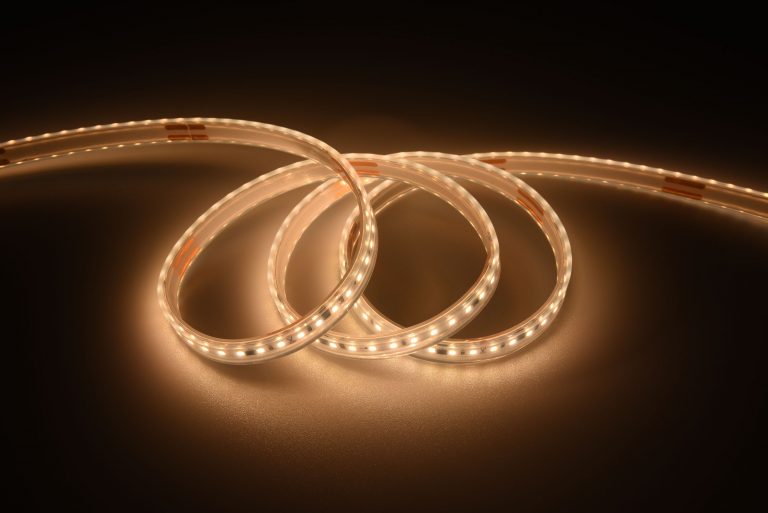
What to evaluate now?
Three simple metrics I insist on when I advise clients: 1) power margin (wattage capacity + 20%), 2) measured voltage drop across your expected run length, and 3) CRI and correlated color temperature stability under load. Check those and you reduce surprises. I call these the working trio because they are both easy to measure and meaningful. Use them when you sample products or build listings for your e‑commerce store.
Closing recommendations
I’ve spent over 15 years buying, selling, and installing LED systems for cafés, retail chains, and light‑heavy e‑commerce clients. From that experience I offer three practical evaluation metrics to guide decisions: 1) Confirm the driver wattage and add 20% headroom; 2) Measure or calculate expected voltage drop for the run length and specify feed points accordingly; 3) Require a CRI report and test strips in situ for at least 72 hours under normal load. These steps are specific, verifiable, and they saved one client in Rome roughly €900 in avoided returns in late 2023. They will save you time.
I stand by simple, testable standards and clear numbers. If you want to discuss a real layout — blueprints, store hours, or shelf depths — bring them to the table. We can map the right strip type, decide on IP and channels, and estimate driver sizing together. I’ll sign off with a practical note: procurement is not only price per meter. It’s about predictable light and predictable costs. For solid supply and detailed product options, check LEDIA Lighting.

