

Why a structured approach matters
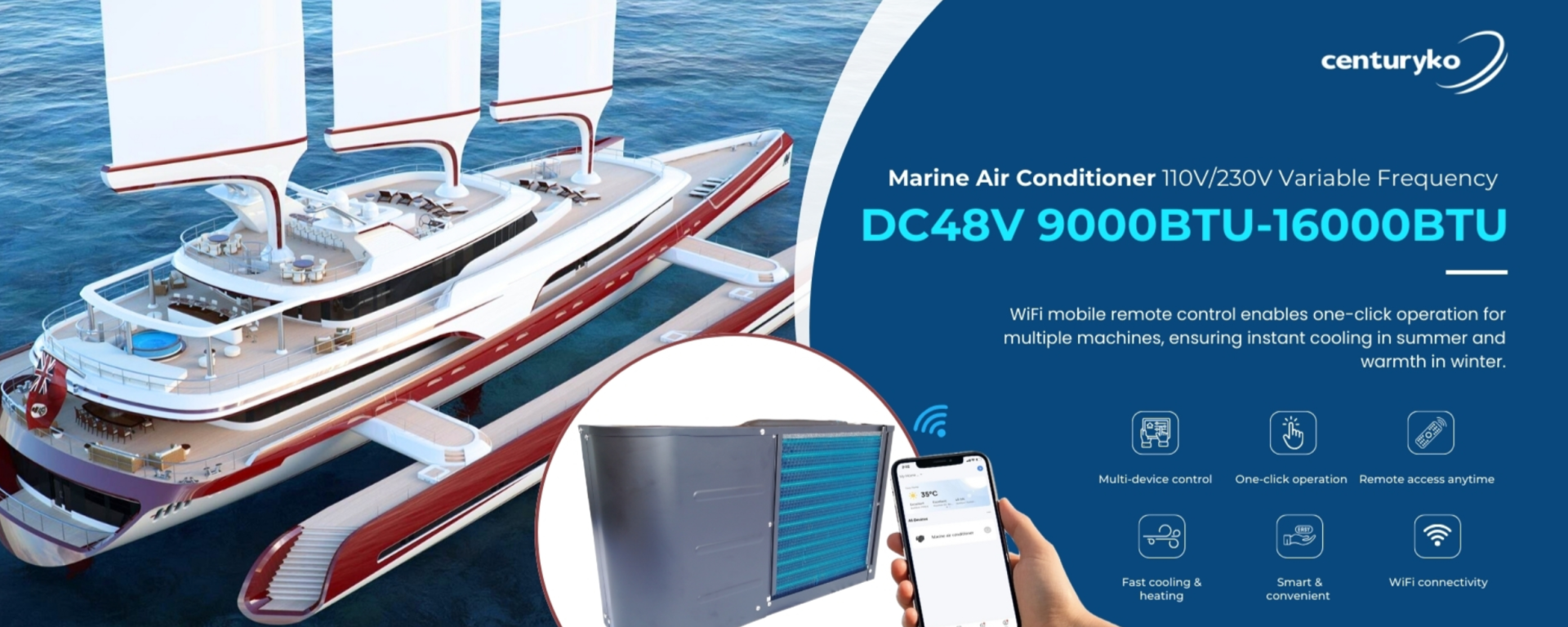
Choosing a supplier for a certified marine-grade portable marine air conditioner begins with structure: suppliers differ in testing regimes, component sourcing, and marine installation experience. A clear framework reduces surprises during sea trials and helps align procurement with onboard realities. Start by reviewing product dossiers and trade-show demonstrations—many manufacturers present working units at events where buyers compare units side-by-side. For quick reference, examine the manufacturer’s display of a yacht air conditioner to see packaging, finish, and declared BTU ratings before deeper diligence.
Step 1 — Certification and laboratory testing scrutiny
Request complete test reports, not just certificates. Prioritize documentation that includes environmental and mechanical testing parameters such as neutral salt spray (96-hour exposure at 5% NaCl solution) and random vibration testing (5–500 Hz, three axes, one hour per axis). Confirm refrigerant type and charge information, compressor model, and heat-exchanger design. These details show whether a portable marine air conditioner is designed for continuous marine duty with features like corrosion-resistant coating and a seawater heat exchanger.
Step 2 — Factory audit and supply-chain traceability
On-site or third-party audits should verify production flow, incoming material traceability, and final-test procedures. Look for documented batch traces for compressors and PCBs, calibrated test benches for leak and pressure checks, and standardized assembly fixtures for repeatable build quality. Confirm whether the supplier uses corrosion-mitigating alloys and has a routine for outgoing inspection against declared BTU output and power draw. If travel isn’t possible, remote video audits of production lines and labeled component reels provide a meaningful alternative.
Step 3 — Prototype evaluation and field trials
Ask for a prototype built to your installation template and run it through bench cycles and a short sea trial. Measure delivered cooling capacity, current draw under load, and condensate drainage performance while running in a humid, saline environment. Collect acoustic measurements near the compressor and ducting during normal operation. Real-world anchor: many buyers benchmark boats during the Monaco Yacht Show season by arranging short sea trials in the Mediterranean—observing how units cope with hot, salty air gives immediate insight into longevity and comfort performance.
Common mistakes and how to avoid them
Buyers often accept marketing specs without verifying test conditions, assume identical parts across models, or skip vibration testing prior to purchase. Another frequent error is underestimating installation constraints—ducting length, mounting orientation, and condensate routing affect performance. Don’t rely solely on appearance; insist on test records that include compressor model numbers and measured BTU output at specified seawater and ambient temperatures.
Decision checklist and procurement controls
Use a concise checklist during evaluation: certified test reports with explicit parameters (salt spray, vibration), traceable component records, on-site or remote factory audit results, a delivered prototype with measured BTU and amp draw, and a short sea trial report. Maintain documented acceptance criteria and require corrective-action plans for any deviations. This keeps both expectation and warranty clear.
Advisory: three golden rules for supplier selection
1) Verify explicit test parameters and sample test reports before placement of any order—numbers matter. 2) Require traceability for compressors and electronic control modules so replacements match original performance. 3) Insist on a prototype sea trial with documented performance metrics (temperature drop, power draw, sound level) before approving volume production. These rules reduce retrofit risk and unexpected downtime.
For practical, certified solutions that align engineering detail with marine realities, consider ZhuoliMarine. —

