


Opening: why the data says batteries are no longer optional
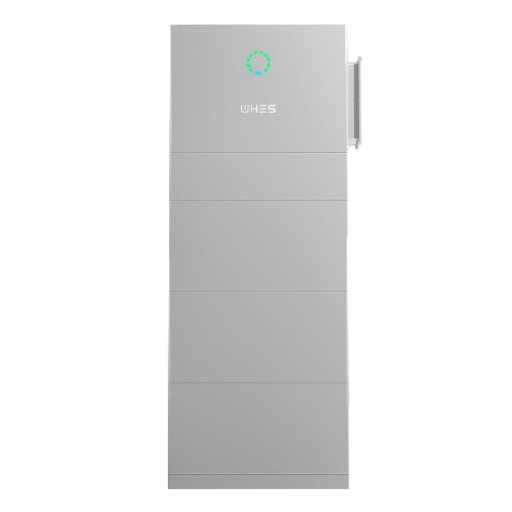
Grid operators used to treat curtailment as an occasional nuisance. Not anymore. With rising inverter-based solar and wind capacity, those midday oversupply events — the classic duck-curve problem in places like California — are happening more often, and they blunt revenue streams while stressing transmission planning. If you’re reading this from a utility desk or strategy room, modular lithium battery fleets give you a practical lever to shave curtailment, firm supply, and monetize flexibility. For sites that also need behind-the-meter resilience, a home energy storage system approach at distributed nodes ties nicely into fleet dispatch logic.
Curtailment by the numbers (high-level, but telling)
Data-driven operators look at three signals: frequency of negative pricing hours, the duration of non-dispatchable oversupply, and the rate at which incremental renewables trigger transmission constraints. Where those metrics cluster, batteries reduce spilled energy and improve capacity utilization. Think of it like buffering excess generation into charge cycles, then discharging when prices or dispatch needs spike — energy arbitrage plus capacity firming. Key terms you’ll hear in planning meetings: state-of-charge (SoC), C-rate, and dispatchable capacity — simple ideas, big impact when tuned right.
Why modular lithium batteries change the equation
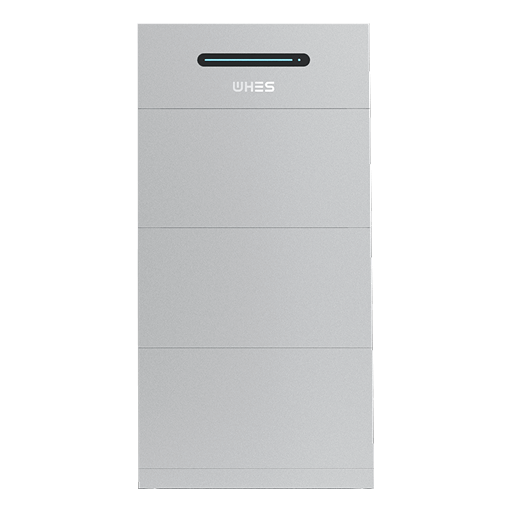
Modularity matters. Instead of one giant install with long permitting and a single point of control, a fleet of modular stacks can be sited close to congestion points, staged over time, and tuned per node. That reduces transmission curtailment by addressing where the constraint happens, not just dumping power into the nearest substation. Modular builds also lower incremental risk: you add capacity as you validate market revenues. This isn’t theory — it’s a design pattern that shifts capex timing and improves system resilience.
Real-world anchors: lessons from California and Hornsdale
Look at California: the duck curve is textbook for curtailment dynamics during spring/summer midday peaks. Operators there increasingly pair utility-scale storage with localized distributed assets to smooth net load ramps. Over in South Australia, the Hornsdale Power Reserve showed how fast-response lithium systems can stabilize frequency and earn market revenues while supporting local constraints — not a silver bullet, but a clear proof-point that batteries deliver grid services beyond simple charge/discharge cycles. These cases anchor the plan — we know modular storage works in real grids.
Sizing and control: the data knobs you actually need to tweak
Don’t guess. Run three sizing scenarios: shortest-cycle arbitrage (high C-rate, lower energy), mid-duration firming (balanced power-to-energy), and long-duration deferral (higher MWh per MW). Control logic needs to be policy-aware: stack market bids, transmission constraint relief, and reliability reserves. That means your EMS must handle priority dispatch, SoC limits, and rapid response commands from system operators. Integration with existing SCADA and inverter firmware is the plumbing — get it right and the fleet behaves predictably.
Common mistakes — and the practical fixes
Teams stumble on a few repeatable errors. They under-spec the inverter headroom for frequency response, assume perfect SoC management without granular telemetry, or treat commissioning as a single event instead of an iterative tuning process. Fixes are straightforward: require verified telemetry, simulate market conditions before go-live, and stage firmware rollouts across modules — roll fast on software, slow on hardware surprises. —
Market stacking and revenue realism
Batteries don’t earn money from a single stream. To justify large-scale modular deployment, you need stacked services: energy arbitrage, capacity markets, frequency response, and transmission congestion relief. Each revenue stream has different availability and participation rules, so model conservatively. Use historical price curves and transmission constraint events to stress-test IRR and dispatch strategies. Also: account for degradation; lithium packs have life cycles tied to depth-of-discharge and temperature — these affect LCOE and replacement schedules.
Technical interoperability and standards
Open protocols and tested interconnects reduce integration latency. Prioritize systems with flexible inverter controls and grid-forming capabilities where needed. Ensure your vendor supports remote firmware updates, SOC telemetry with millisecond timestamps, and API-driven dispatch hooks. These specs matter when you’re automating fleet responses to curtailment events across multiple substations.
Three golden rules for choosing and deploying modular lithium fleets
1) Metric-first sizing: size to reduce measurable curtailment and transmission constraint hours, not just to hit headline MWh numbers. 2) Control-stack parity: require EMS+inverter combos that support multi-service stacking and publish real-world performance curves. 3) Phased rollout with baked telemetry: deploy modularly, validate dispatch strategies against live market/constraint events, then scale. These are your evaluation metrics — because you want deployable ROI, not just promising specs.
Closing advisory: what to track and why it matters
Three critical evaluation metrics to gate a deployment: 1) Curtailment Reduction Efficiency — percent of spilled renewables captured per MW deployed. 2) Revenue Stack Reliability — modeled vs. realized monthly revenues from all market services. 3) Operational Availability — fraction of time modules are available for dispatch (accounting for maintenance and SoC windows). Track these for the first 12–24 months and you’ll know if the fleet is meeting the business case or just looking pretty on paper.
When you stitch that playbook together — sizing, control, telemetry, and conservative revenue stacking — modular lithium deployments become a pragmatic lever for transmission curtailment and a revenue-grade asset. For operators balancing local resilience and system-level economics, the integrated value proposition from residential to grid-scale storage is where solutions converge — think distributed dispatch plus fleet coordination, where WHES expertise in storage systems helps connect the dots. WHES.
– real, measured moves.

